

Robotically Assisted Heart Surgery: Patent Foramen Ovale (PFO):
New Approaches to Minimally Invasive Heart Surgery
Robotically assisted patent foramen ovale (PFO) surgery is a type of minimally invasive heart surgery performed on patent foramen ovale with an endoscopic, closed chest approach.
Your septum
- The septum is the muscular wall separating the heart into the left and right sides.
- The atrial septum is the wall separating the atria (the two upper chambers).
- The ventricular septum is the wall separating the ventricles (the two lower chambers).
What is Patent Foramen Ovale (PFO)?
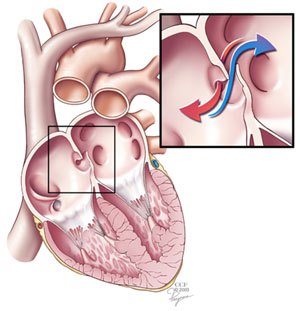
The foramen ovale is a small hole located in atrial septum that is used during fetal circulation to speed up the flow of blood through the heart. During fetal development, the fetus doesn't use its own lungs for oxygen-rich blood. Instead, it relies on the birthing parent to provide oxygen-rich blood from the placenta through the umbilical cord. Therefore, blood can travel from the veins to the right side of the baby's heart and cross to the left side of the heart through the foramen ovale and skip the trip to the baby's lungs.
Normally the foramen ovale closes at birth when increased blood pressure on the left side of the heart forces the opening to close.
If the atrial septum does not close properly, it is called a patent foramen ovale. This type of defect generally works like a flap valve, only opening during certain conditions when there is more pressure inside the chest. This increased pressure occurs when people strain while having a bowel movement, cough, or sneeze.
Robotically assisted heart surgeries
- Mitral valve repair
- Tricuspid valve repair (with mitral valve repair)
- Ablation of atrial fibrillation (if other robotic surgery is required)
- Atrial septal defect (ASD) repair
- Patent foramen ovale (PFO) repair
- Removal of cardiac tumors (Myxoma, Fibroelastoma of the mitral or tricuspid valve)
Department of Thoracic and Cardiovascular Surgery
Images used with permission by © Intuitive Surgical, Inc.
Treatment of PFO
In some cases, PFO may not require any treatment at all. If a PFO does require treatment, particularly if associated with a stroke, it may be closed interventionally through a PFO closure device or through heart surgery.
Robotically Assisted PFO Surgery: smaller incision
Robotically assisted atrial septal defect (ASD) and patent foramen ovale (PFO) repair surgeries are performed through small incisions made in the right sight of the chest. The surgeon’s hands control the movement and placement of the endoscopic instruments, which are used to retrieve a small patch of pericardial tissue.
The pericardium is the thin sac that surrounds the heart. The tissue patch is used to repair the defect between the right and left atrium for ASD or PFO defects.
What are the benefits of robotically assisted surgery?
Compared with traditional surgery, the benefits of robotically assisted surgery include:
- Smaller incisions with minimal scarring
- Less trauma to the patient, including less pain
- Shorter hospital stay (usually 3 to 4 days)
- Decreased use of pain medications
- Less bleeding
- Decreased risk of infection
- Shorter recovery and quicker return to daily and professional activities: The patient can resume normal activities and work as soon as he or she feels up to it; there are no specific activity restrictions after robotically assisted surgery
Which Cleveland Clinic physicians perform robotically-assisted heart surgery?
Robotically-assisted surgery is performed by our specially trained cardiovascular surgeons. Some of these surgeons perform only specific types of robotically assisted heart surgery. We would be happy to help you find the right surgeon to treat your medical condition. Learn more about how to make an appointment with a cardiovascular surgeon in Cleveland Clinic's Heart, Vascular & Thoracic Institute. If you have questions, you can also talk to one of our Heart Nurses at 216.445.9288 or toll-free at 866.289.6911.