

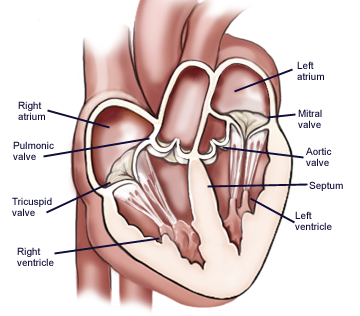
How do heart valves work?
Blood passes through a valve before leaving each chamber of the heart. There are four valves within your heart. The heart valves make sure blood flows in only one direction through your heart.
The mitral valve is located between the left upper and lower chambers of the heart. It has two leaflets that open and close similarly to a double door.
What is mitral stenosis?
Stenosis means narrowing of an opening, such as a heart valve. Stenosis of the mitral valve limits the forward flow of blood from the left atrium to the left ventricle. This may cause blood and fluid to back up in the lungs.
Mitral stenosis usually develops many years after a person has had rheumatic fever, although many people diagnosed with mitral stenosis don’t recall ever having the illness.
What are the symptoms?
Many of the symptoms of mitral stenosis, such as shortness of breath and fatigue, result from a backup of blood in the lungs. Other symptoms of mitral stenosis may include:
- Sudden weight gain.
- Weakness.
- Dizziness.
- Swelling in the ankles, feet and/or abdomen (edema).
- Heart palpitations (irregular heartbeat).
What causes mitral stenosis?
Rheumatic fever causes mitral stenosis, although the condition doesn’t develop until several years after the initial infection. During rheumatic fever, the valve becomes inflamed. Over time, the leaflets of the inflamed valve stick together and become scarred, rigid and thickened, limiting its ability to open completely.
How is mitral valve stenosis treated?
Valve stenosis can sometimes be treated with medications if the symptoms are mild. When medications don’t work to manage symptoms, balloon valvotomy or surgical valve repair or replacement is performed.
Balloon valvotomy successfully opens the narrowed valve and improves the overall function of the heart. If balloon valvotomy can’t be performed, surgical valve repair or replacement may be options. Valve repair may be performed to separate fused valve leaflets, sew torn leaflets or reshape parts of the valve. Valve replacement (removing the old valve and replacing it with a mechanical or biological valve) is reserved for valves that are damaged beyond repair.
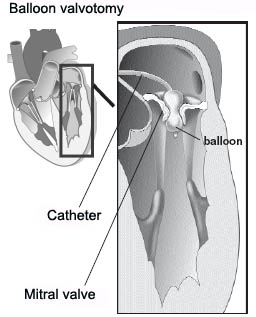
Balloon Mitral Valvotomy
Balloon valvotomy is used to increase the opening of a narrowed (stenotic) valve. It’s used for:
- Select patients who have mitral valve stenosis with symptoms.
- Older patients who have aortic valve stenosis, but aren’t able to undergo surgery.
- Some patients with pulmonic valve stenosis.
This balloon valvotomy procedure can be performed on the mitral, tricuspid, aortic or pulmonary valves.
What should I expect before the procedure?
Most patients will need to have blood tests, a chest x-ray, an electrocardiogram and an echocardiogram. These tests are usually scheduled the day before the procedure. Ask your provider what medications should be taken on the day of your test.
- If you have diabetes, ask your physician how to adjust your medications the day of your test.
- Tell your healthcare provider if you’re taking any blood-thinning medications such as Coumadin® (warfarin). An alternate method for thinning your blood may be prescribed a few days before the procedure.
You won’t be able to eat or drink after midnight the evening before the procedure. Leave all valuables at home. If you normally wear dentures, glasses or a hearing assistance device, plan to wear them during the procedure to help with communication. Tell your healthcare provider or your care team if you have any allergies.
How is a balloon valvotomy performed?
Balloon valvotomy is a nonsurgical procedure performed in the cardiac catheterization laboratory by a cardiologist and a specialized team of nurses and technicians.
- Long, slender tubes called catheters are first placed into blood vessels in the groin and guided into the heart’s chambers.
- The cardiologist then creates a tiny hole in the wall between the upper two chambers of the heart. This hole provides an opening for the cardiologist to access the left atrium with a special catheter that has a balloon at the tip.
- The catheter is positioned so the balloon tip is directly inside the narrowed valve. The balloon is inflated and deflated several times to widen the valve opening.
- Once the cardiologist has determined that the opening of the valve has been widened enough, the balloon is deflated and removed.
During the procedure, the cardiologist may perform an echocardiogram (ultrasound of the heart) to get a better picture of the mitral valve.
How long does the procedure last?
The procedure lasts about one hour, but the preparation and recovery time add several hours. Plan on staying at the hospital all day for the procedure and remaining there overnight. Patients usually go home the day after. Arrange for someone to take you home when you’re ready to leave.
What should I expect during the recovery?
You’ll need to lay flat for about six hours after the catheter has been removed from your groin to prevent bleeding. You’ll have a tight, bulky dressing on your groin area while you’re resting in bed. Don’t bend your legs during this time to prevent bleeding. A sheet may be placed across your legs to remind you to keep them straight. Your nurse will tell you when you may sit up and get out of bed.
- You shouldn’t eat anything until the catheter has been removed from your groin.
- Notify your nurse immediately if you have a fever, chest pain, swelling or pain in your groin or leg, or bleeding at your groin site.
You’ll have an echocardiogram the morning after your procedure.
Medications may be prescribed. Ask your provider if it’s safe to continue taking the medications you took prior to the procedure. Once you’ve recovered from the procedure and have talked to them about your follow-up appointments and care, you can go home.
You’ll be able to return to most of your normal activities the day after the procedure. Ask your provider when it’s safe to drive, return to work or begin or continue an exercise program.
Once your cardiologist has successfully opened the narrowed mitral valve, your symptoms of valve disease should decrease or disappear completely.
When should I call my doctor?
When you go home after the procedure, call your provider immediately if you have:
- A fever (100 degrees Fahrenheit or 38 degrees Celsius) or higher.
- Chest pain.
- Shortness of breath.
- Unusual swelling or weight gain.
- Bleeding, swelling, pain or changes in skin color at the groin site.
- A return of previous symptoms (symptoms you had before the procedure was performed).
Does balloon valvotomy cure mitral valve disease?
Balloon valvotomy is a procedure that may relieve many of the symptoms of valve disease, but it won’t cure the condition. Some patients may continue to need medications, even after a successful procedure.
After the procedure, you’ll need to continue seeing your provider regularly to make sure your heart valves are working properly. Lifestyle factors that can worsen valve disease may also need to be changed. An exercise program may be prescribed to improve your heart health.
To protect your heart valves from further damage, tell your doctors, dentist and other health care providers that you have valve disease so antibiotics can be prescribed before you undergo any procedure that may cause bleeding. Also, take good care of your teeth and gums.
New percutaneous, nonsurgical procedures to treat mitral regurgitation (leaky valve) are being tested.
A note from Cleveland Clinic
Hearing that you may need a procedure to help treat your mitral valve stenosis can sound scary, but balloon mitral valvotomy is a nonsurgical option that can relieve or lessen many of your symptoms. Talk to a healthcare provider about whether this treatment may be a good fit for you.