

What is chest pain?
Chest pain is a pain in any area of your chest. It may spread to other areas, including down your arms, into your neck or jaw. Chest pain can be sharp or dull. You may feel tightness, achiness, or you may feel like your chest is being crushed or squeezed. Chest pain can last for a few minutes or hours. In some cases, it can last six months or longer.
What does chest pain feel like?
Angina, one type of chest pain, happens when your heart isn’t getting enough oxygen-rich blood. Angina is a symptom of a heart issue. It often worsens during exertion and improves when you’re at rest.
Angina can:
- Feel like pressure or squeezing in your chest.
- Cause discomfort in your shoulders, arms, jaw, neck and back.
- Feel similar to indigestion.
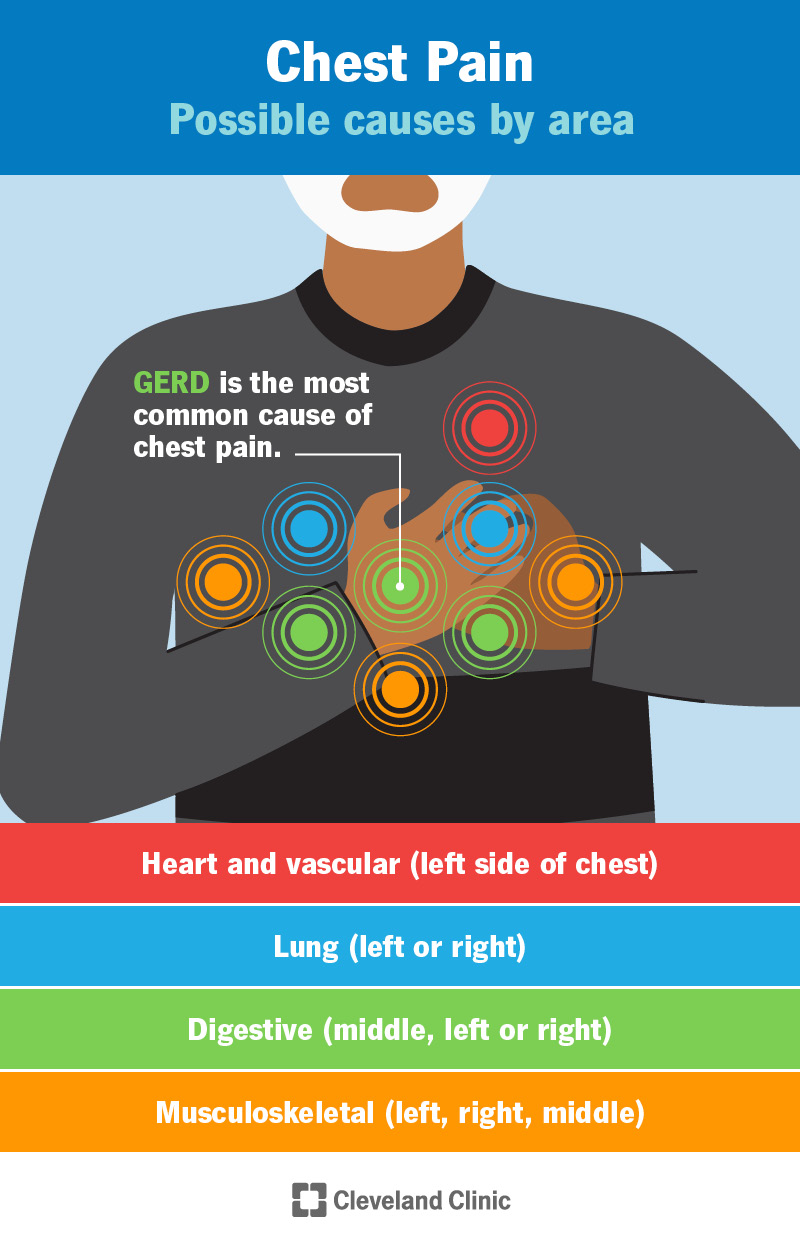
What are the most common causes of chest pain?
Although most people think of chest pain as a sign of a heart issue/heart attack, many things can cause it. Chest pain can be a symptom of:
Heart and vascular problems (pain on the left side of your chest)
Heart attack
Heart muscle dies when it can’t get enough oxygen because of a blockage in the coronary artery supplying its blood.
Coronary artery disease
Cholesterol buildup can narrow and block the blood vessels that carry blood to your heart. It’s typically worse with exercise because you can’t get enough blood to the heart muscle and clogged coronary arteries.
Coronary artery dissection
A coronary artery wall can rip, create a bulge and block your artery. This causes pressure or pain in your chest, and it could lead to a heart attack.
Pericarditis
An infection or other cause can start inflammation in the lining around your heart, causing a sharp pain in your chest. The pain can spread to your left shoulder and arm. The pain can be worse when you’re lying down and worse when taking deep breaths.
Hypertrophic cardiomyopathy
The muscle walls of your pumping ventricles (or lower heart chambers) become thick and stiff. With this issue, you can’t get enough blood into — or out of — your heart’s chambers, and your heart has a harder time getting oxygen-rich blood. Hypertrophic cardiomyopathy usually happens because of a problem in the genes you got from your parents.
Aortic dissection
A tear can happen in the wall of your aorta, making the layers of the wall come apart from each other. This very strong pain happens without warning and feels like something is ripping and is often felt in your chest, back and between the shoulder blades.
Aortic aneurysm
Blood that pushes against a weak part of your aorta’s wall can make it bulge out. Without treatment, this weak spot can break open and cause severe pain in your chest or abdomen. If an aortic aneurysm ruptures, this is an emergency that requires immediate treatment.
Mitral valve prolapse
The valve that lets blood flow between your left atrium and left ventricle may not close completely every time your heart beats. This allows blood to flow back to the chamber it just left.
Digestive issues (middle of your chest)
Gastroesophageal reflux disease (GERD)
Acid from your stomach comes up into your esophagus, making you feel burning or tightness (heartburn) under your breastbone. This chest pain may be worse when lying down because gravity can’t help keep stomach acid down like it does when you’re standing up. It often gets worse after eating certain meals or spicy foods — and it’s usually worse at night after dinner.
Ulcer
Having an infection or taking NSAIDs can make it easier for stomach acid to injure your stomach lining. This can feel like burning or aching right under your breastbone. It can get worse when you eat acidic foods or drink alcohol.
Muscle spasms in your esophagus
For an unknown reason, muscles that normally push food through your esophagus stop doing this. Instead, you have a strong squeezing feeling under your breastbone with or without trouble swallowing. This can happen when you exercise.
Esophagitis
An allergic reaction to food can cause inflammation in your esophagus’ walls. Like you would with GERD, you may have a burning pain under your breastbone.
Digestive issues (right side chest pain)
Gallstones
Made of mostly cholesterol, gallstones can block ducts where a fluid that helps digestion (bile) needs to travel to get to your small intestine. Swelling in your gallbladder makes it hurt under your ribs on your right side. This is an extreme pain that can last for many hours.
Digestive issues (left side chest pain)
Hiatal hernia
Usually for an unknown reason, part of your stomach can go through an opening in your diaphragm muscle that’s normally only for your esophagus. This reduces blood flow to your stomach. People with a hiatal hernia often have difficulty swallowing.
Gastritis
Stomach lining inflammation from many causes can make your lower left chest hurt. You also might feel sick to your stomach and throw up.
Pancreatitis
Inflammation of your pancreas can give you bad pain in your upper abdomen. It also can make you feel nauseous and throw up.
Lung issues (left side chest pain or right side chest pain)
Pulmonary embolism
A blood clot from somewhere else in your body can get stuck in a pulmonary artery inside your lung. You’ll probably have shortness of breath, too. People with pulmonary embolism often describe sharp pain that worsens when breathing in.
Chronic obstructive pulmonary disease (COPD)
Problems with your air sacs and/or airway lining make it difficult for you to breathe. Your chest can feel tight and you may have shortness of breath.
Pneumonia
If your defenses aren’t strong enough, you can get an infection in your lungs. This infection can make either side of your chest hurt, but you’ll also have fever, chills and a cough with mucus.
Pleurisy or pleuritis
An infection and/or inflammation of the membrane around your lungs causes sharp chest pain that gets worse when you cough or breathe deeply. You may also have pain in your shoulder.
Pneumothorax (collapsed lung)
Air can get between the layers of a tissue that covers your lungs, causing part of all of your lung to collapse. Without warning, you may feel a sharp pain in your chest and possibly your neck and shoulder.
Pulmonary hypertension
Several disorders can cause high blood pressure in your pulmonary arteries, which take blood to your lungs to trade carbon dioxide for oxygen. You get chest pain because it’s harder for your heart to push blood through blood vessels that are narrow from hypertension.
Asthma
Allergens or irritants can make your airways narrow temporarily, making it hard to breathe. You may feel a tightness in your chest and also cough or wheeze.
Musculoskeletal issues (left side chest pain or right side chest pain)
Broken rib
Accidents can make the ribs protecting your chest break. This hurts a lot, especially when you take deep breaths. It hurts for several weeks.
Sprained chest muscle
Injuries can create tears in your muscles that cause pain, especially when you move. You may also have swelling and bruising.
Musculoskeletal issues (middle of your chest)
Costochondritis
Inflammation can happen in cartilage that links most of your ribs to your breastbone. This can cause a sharp pain in your chest that gets worse during coughing or deep breathing.
Other issues (left side chest pain or right side chest pain)
Shingles
The chickenpox virus you had as a child can become active again later in life, usually in people older than 50. As shingles, this virus causes a painful rash that shows up on the skin on your upper body. It usually develops in a certain part of your chest, and typically only on one side.
Lung cancer
Chest pain from lung cancer hurts more when you cough, laugh or take a deep breath.
Other issues (middle of your chest)
Panic attack
A short-term, unexpected feeling of anxiety and fear can bring chest pain with it. A panic attack can feel like a heart attack and may include other symptoms similar to one.
What is the main cause of chest pain?
GERD, not a heart attack, is the most common cause of chest pain. Still, you should get medical attention to get the treatment you need.
How is chest pain treated?
Treatment for chest pain depends on the cause of the pain. If a heart attack is causing your chest pain, you’ll get emergency treatment as soon as you seek help. This can include medication and a procedure or surgery to restore blood flow to your heart.
If a noncardiac condition is causing your chest pain, your healthcare provider will talk to you about treatment options. Depending on your illness and how bad it is, they may recommend:
- Lifestyle changes.
- Medicines.
- Surgery.
How can chest pains be prevented?
You can reduce your risk of heart, vascular and other diseases by following a healthy lifestyle. This includes:
- A healthy diet. Your healthcare provider or registered dietitian can help you create an eating plan that’s right for you.
- Managing health conditions you have, such as high blood pressure, high cholesterol and diabetes.
- Exercising most days of the week.
- Reaching and maintaining a healthy weight.
- Limiting the amount of alcohol you drink.
- Not using tobacco products.
How do I know if my chest pain is serious?
Call 911 or have someone take you to the closest emergency room right away if you have chest pain that lasts longer than five minutes and doesn’t go away when you rest or take medication.
Cardiac chest pain can be life-threatening.
Chest pain can be a sign of a heart attack. Other signs of a heart attack include:
- Sweating.
- Nausea or vomiting.
- Shortness of breath.
- Light-headedness or fainting.
- A rapid or irregular heartbeat.
- Pain in your back, jaw, neck, upper abdomen, arm or shoulder.
What should I do if I have chest pain?
Don’t ignore any type of chest pain or avoid getting treatment.
If your chest pain is new, comes on suddenly, or lasts longer than five minutes after you rest or take medication, call 911 or have someone take you to the closest emergency room.
If your chest pain goes away or comes and goes, see your healthcare provider as soon as possible to find out what’s causing the pain, even if it’s not severe.
Is chest pain normal?
No. Chest pain isn’t normal. If you have chest pain, contact your healthcare provider or 911 right away.
A note from Cleveland Clinic
Although most people think of a heart attack when they think of chest pain, there are many other conditions that cause chest pain. Know the signs of a heart attack and seek medical attention soon after you start having pain. Make a mental note of what you were doing when your chest pain happened so you can tell your healthcare provider. Being able to describe the kind of pain you’re having and where can help your provider give you a diagnosis.