

What is eye pain?
You may describe eye pain as sharp, aching or throbbing. It may happen in one eye or both eyes. You might also describe your eye pain in terms of where it hurts, like pain behind your eye.
Eye pain is more serious than the simple irritation you feel when you have a piece of dirt or an eyelash in your eye. Eye pain is more than the feeling of eyestrain that you might feel after staring at a computer all day. In those cases, your eye feels better when the lash or dirt is out of your eye or when you’re able to rest your eyes by closing them or using a cool compress.
The more serious type of eye pain is intense, lasts longer and can happen along with other symptoms. Sometimes eye pain can be a sign of an underlying health problem or injury. You should talk to a healthcare provider as soon as you can if you have a new eye pain or eye pain that keeps getting worse.
Who is more likely to experience eye pain?
Eye pain due to injuries can happen to anyone, particularly if you don’t wear protective eyewear during activities that put your eyes at risk.
You may be more prone to eye pain if you wear contact lenses or if you have certain conditions, like allergies or sinus issues.
What parts of your eye might have eye pain?
Eye pain can refer to pain in almost any part of your eyes, including:
- Your eyelid.
- Your conjunctiva, a membrane that protects your eye.
- Your sclera, the white of your eye.
- Your cornea, the clear dome on your eye that helps with focus.
- Your eye socket (orbit), the cavity that holds your eye in your skull.
Being able to explain where your eye hurts can help your healthcare provider determine the cause.
How will a healthcare provider diagnose what’s causing your eye pain?
In most cases, a provider will start by asking you about your medical history and your symptoms. They’ll probably ask you:
- When did your eye pain start?
- How does your eye pain feel?
- Where in your eye does it hurt?
- Is there a history of injury or possible foreign bodies (objects)?
- Do you wear contact lenses?
- What other signs and symptoms do you have? (Ex: vision changes, discharge, etc.)
A provider will also do a complete eye exam. They’ll use microscopes and other equipment to examine the eye. It’s possible the provider will also use drops to dilate your pupils for a thorough evaluation.
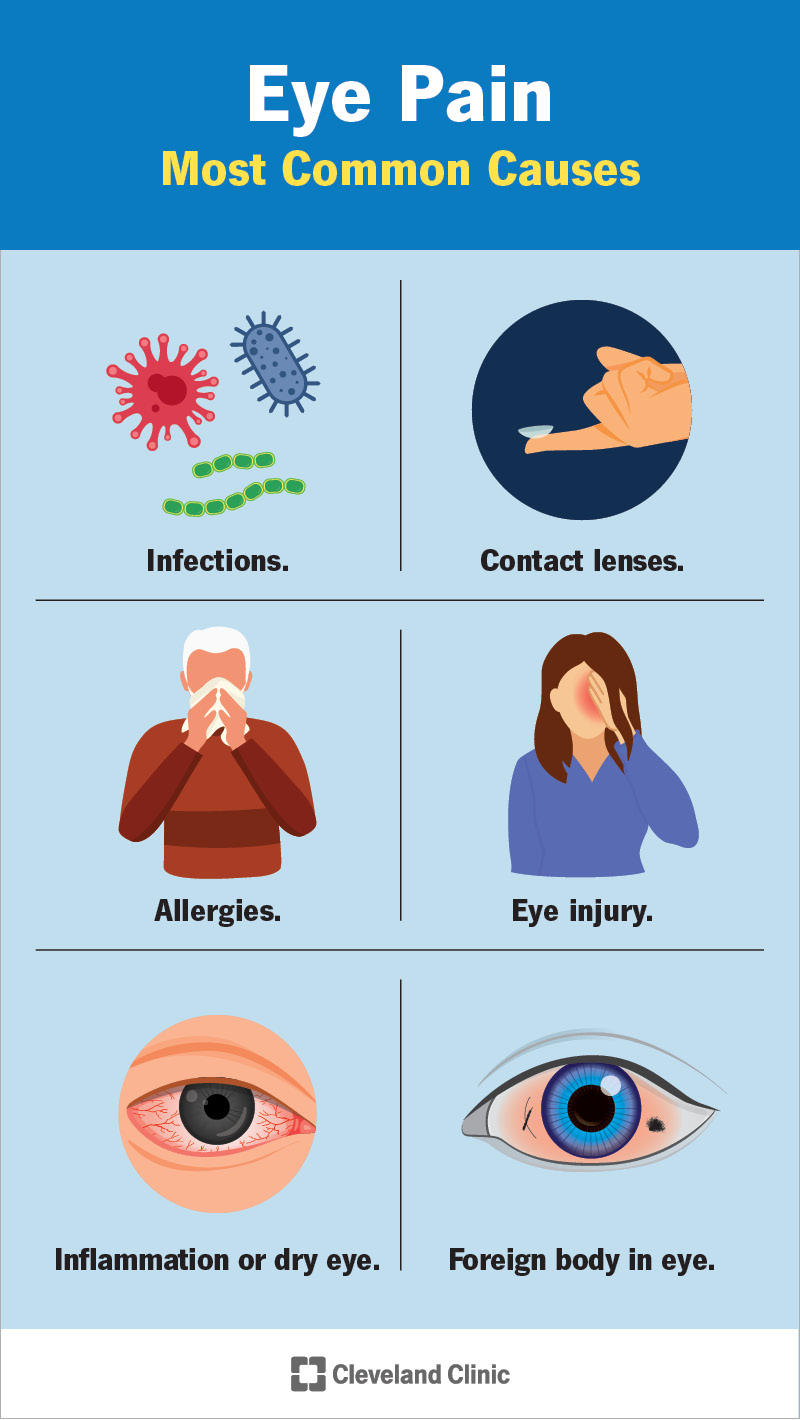
What are the most common causes of eye pain?
Many conditions and factors can cause eye pain. These can include:
- Infections: You can transfer viruses, bacteria or fungi from your hands to your eyes when you rub them or put your hands near your eyes. Infections can also spread from areas on your body (like the nose or sinuses) to your eyes.
- Contact lenses: Lenses that are dirty or that don’t fit well can cause pain in your eyes. Wearing contact lenses longer than prescribed (overnight) or not replacing them appropriately can also lead to eye problems. Don’t wear contact lenses that aren’t prescribed for you by your provider.
- Allergies: If you’re allergic to pollen, dust or animals, your eyes can become irritated, itchy and even painful.
- Toxins: Your eyes can become irritated from exposure to cigarette smoke, air pollutants, chlorine in a swimming pool or other types of hazardous chemicals.
- Inflammation: Inflammation, an immune system response, can cause swelling or color changes in your eye. The white part of your eye can turn red, you can become very sensitive to light and your eye can be painful.
- Increased eye pressure: This can happen when the fluid in your eye doesn’t drain properly.
What does eye pain feel like?
People describe eye pain in different ways, including feeling like:
- There’s something in your eye (called foreign body sensation). You might also say that your eye feels gritty or sandy.
- Dull throbbing or pressure pushing against your eye from inside.
- Your eye is swollen.
- Stabbing or shooting pain in your eye.
- Your eye is burning.
What are some common conditions associated with eye pain?
Common conditions, signs and symptoms linked to eye pain can involve only one part of the eye or more than one part. Many types of eye problems can cause pain, including the following conditions.
Causes of eye painTypes, signs and symptomsCellulitis-Preseptal, which affects the eyelid skin.
-Orbital, which affects the eye socket, making proper eye movement difficult and leads to blurry and/or double vision. -Viral, the most common type causes burning, red, watery eyes and is highly contagious, particularly in schools or crowds.
-Bacterial, which causes a sore, red eye with sticky pus. It often affects only one eye.
-Allergic, which happens because of an allergic reaction to an allergen, isn’t contagious but does cause itchy, red, watery eyes.Corneal damage and infections-Corneal abrasion, a scrape or scratch on the cornea.
-Corneal laceration, a partial tear or a tear through the cornea.
-Corneal ulcer, or an open sore.
-Keratitis, which is surface inflammation and irritation that can be caused from severe dryness or other infections.Dry eyes-Feeling like you have something in your eye.
-Being sensitive to light (photophobia).
-Watery eyes that are sometimes also red.Glaucoma-Angle-closure glaucoma is rare but causes severe pain, nausea and blurred vision from a sudden, rapid increase in eye pressure.Other conditions-Blunt trauma.
-Optic neuritis.
-Uveitis.
How is eye pain treated?
The first step to treating eye pain is generally to determine the cause and then treat that cause. You may not need pain medications.
Treatment for eye pain caused by infectious conditions
Treating eye pain that results from infections may include:
- Antibiotic, antifungal or antiviral eye drops.
- Oral nonnarcotic medications to reduce pain or allergy symptoms.
- Over-the-counter (OTC) artificial tears to provide comfort.
You can help yourself when you have eye pain and infection by:
- Using a clean towel or tissue every time you wipe your face or your eyes.
- Washing your hands frequently, particularly after coughing, sneezing or using the toilet.
- Keeping your hands and fingers out of your eyes.
- Avoiding the use of contact lenses while your eyes are infected.
- Avoiding the use of makeup while your eyes are infected.
Treatment for eye pain caused by eye injury
If you have an eye injury, you should follow these tips:
- Seek medical care as soon as possible.
- Gently place a shield over your eye until you can get medical attention. You can make a shield from something as simple as the bottom of a paper cup that you can cut out and tape over your eye.
- Unless you’ve had a chemical injury, don’t rinse your eyes with water.
- Don’t try to remove an object that’s stuck in your eye.
- Don’t rub your eye or apply pressure.
- If your eye is bleeding, ask your healthcare provider if you should avoid taking aspirin or anti-inflammatory drugs, as these may thin your blood and make it more difficult to control bleeding.
When should I call a healthcare provider?
You might wonder when you should be concerned about eye pain. You should take any case of eye pain seriously. However, if you have eye pain along with any of the following symptoms, you should get medical help quickly:
- Vomiting.
- Seeing halos around lights.
- Feeling pressure.
- Signs of bodily infection (such as fever or chills).
- Blurred vision.
- Bulging eyeballs.
- Being unable to move your eyes through their normal range of motion.
- A known foreign body or other injury.
A note from Cleveland Clinic
If you injure your eye, or you have intense eye pain, the best thing to do is to go to an emergency room or contact a healthcare provider right away. A provider can make a diagnosis by doing an examination and asking questions about your symptoms. In cases where eye pain happens because of an underlying medical condition, it’s necessary to treat the condition to find relief for your eye pain.