

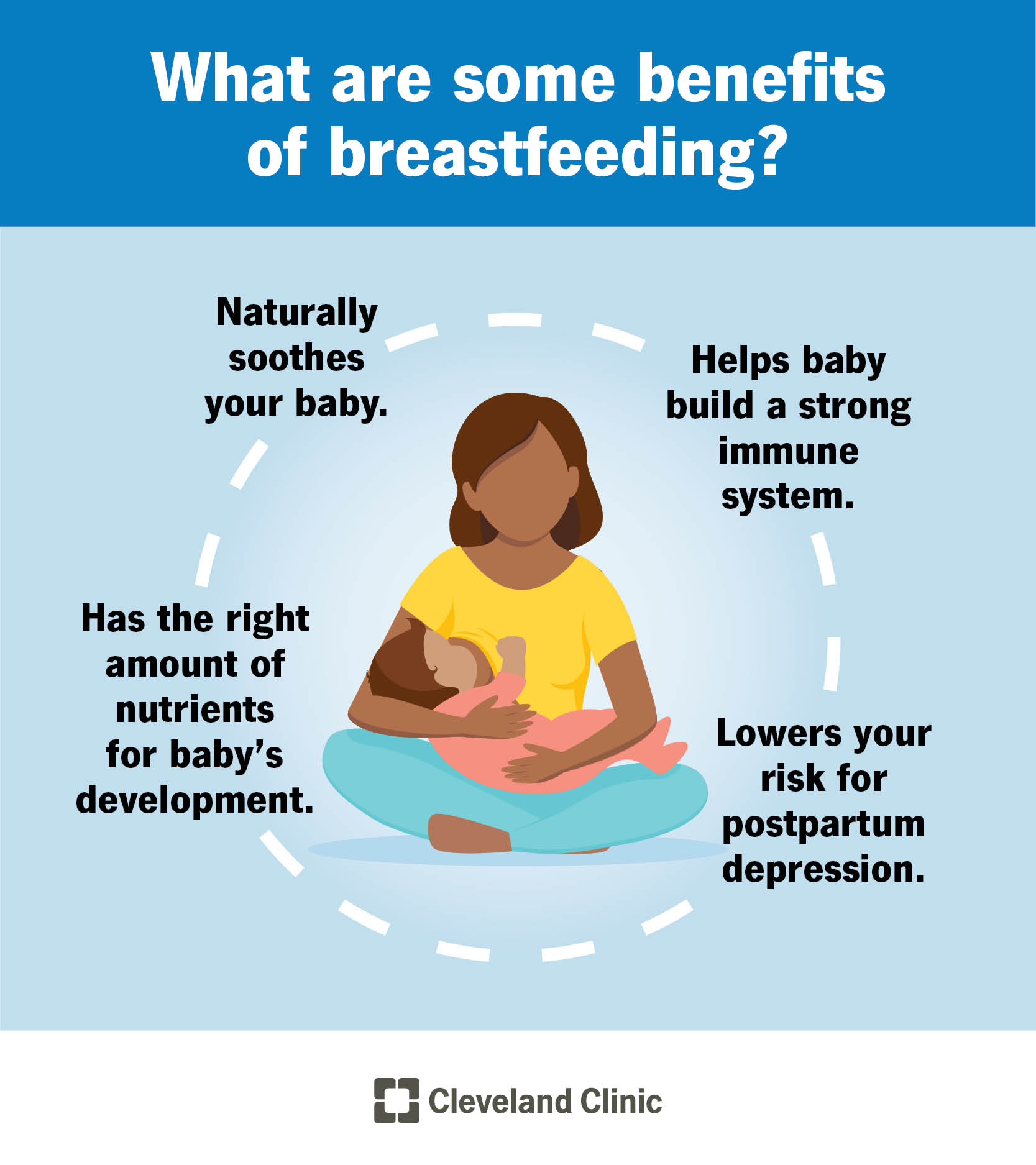
What are the benefits of breastfeeding?
Breastfeeding (chestfeeding) has several health benefits for you and your baby. Understanding the benefits of breastfeeding can help you decide if it’s right for your family.
Benefits for baby
Research suggests that breastfeeding lowers your baby’s risk of certain diseases and helps build a strong immune system. Breastfed (chestfed) babies have a lower risk of:
- Diarrhea, vomiting and preterm necrotizing enterocolitis (NEC).
- Respiratory infections like pneumonia, respiratory syncytial virus (RSV)and whooping cough.
- Ear infections.
- Bacterial meningitis.
- Asthma.
- Sudden Infant Death Syndrome (SIDS) and infant mortality.
- Childhood obesity.
- Eczema.
- Type 2 diabetes.
- Leukemia (in childhood).
- Cavities and orthodontic problems.
- Celiac disease and inflammatory bowel disease (IBD).
Studies show that breastfed infants have a lower hospitalization rate and tend to be in better health. This leads to fewer visits to their pediatrician for sicknesses.
Breastfeeding nutrients
Breast milk contains everything your baby needs to grow and develop. It provides a unique and specific formula of vitamins, minerals and antioxidants.
Some nutritional benefits of breast milk are:
- It’s easy to digest for your baby’s immature tummy and intestines.
- It contains antibodies that protect against infection and boost immunity.
- It has the right amount of fat, sugar, water, protein and vitamins for your baby’s development.
- It promotes healthy weight gain in infants.
- It changes to meet your baby’s nutritional needs as they grow.
- It contains substances that naturally soothe your baby.
Most healthcare organizations recommend that babies are exclusively breastfed for at least six months. Once your baby is old enough for solid food, you can introduce foods and continue with breastfeeding for up to two years or longer.
Benefits for mom or breastfeeding parent
Breastfeeding offers several benefits for you, too. It lowers your risk for several diseases and conditions, like:
- Breast cancer.
- Ovarian cancer.
- Endometrial cancer.
- Thyroid cancer.
- Osteoporosis.
- Type 2 diabetes.
- Cardiovascular disease including high blood pressure and high cholesterol.
- Postpartum depression.
Breastfeeding can also help you recover quicker from childbirth. Breastfeeding produces the hormone oxytocin. Oxytocin helps your uterus contract after delivery. This helps it return to its normal size and reduces the amount of vaginal bleeding after delivery.
Breastfeeding is also a special and unique way to feel connected to your baby. It increases both physical and emotional bonding. Many people feel that the bonding from breastfeeding may help reduce social and behavioral problems in both children and adults.
Some of the other benefits of breastfeeding for you include:
- Promoting faster weight loss after birth (in some people).
- You can breastfeed anywhere without worrying about preparing bottles or mixing formula. Your milk is always available without needing to bring other supplies.
- Breastfeeding parents learn to read their infant’s cues, and babies learn to trust caregivers. This helps shape your baby’s early behavior.
- It’s inexpensive. The cost of formula can be up to $10 a day depending on the brand, type and amount your baby drinks. Breastfeeding may have some initial costs like nursing bras and nipple cream, but it’s more affordable long term.
It’s worth noting that if you exclusively pump, your baby is still getting the nutritional and health benefits of breastmilk.
Are babies who are breastfed smarter?
Studies suggest breastfeeding has a positive long-term effect on brain and behavioral development. However, there hasn’t been a study to confirm that a breastfed baby is smarter than a formula-fed baby. Feeding your baby with formula is also healthy and a great way to support your baby’s growth and development.
Does supplementing with formula reduce the benefits of breastfeeding?
Supplementing with formula doesn’t mean your baby is getting fewer benefits. Having a full, growing and happy baby is what’s most important. If you need give your baby formula, rest assured you’re doing it for the right reasons. Your baby is still getting the nourishment they need.
Does breastfeeding help you lose weight?
Breastfeeding may make it easier for you to lose the weight you gained during pregnancy. Breastfeeding burns calories, which can help with weight loss. Not everyone loses weight from breastfeeding. Researchers aren’t entirely sure why some people lose weight while breastfeeding and others don’t.
Why is breastfeeding important?
Whether to breastfeed your baby is an important decision all parents make. It’s good to take time to understand how breastfeeding affects your baby. Some of the biggest benefits of breastfeeding include:
- It’s easy to digest and contains all the right nutrients for your baby.
- It builds your baby’s immune system and reduces their risk for certain health conditions.
- It’s inexpensive.
Some people aren’t able to fully breastfeed or breastfeed at all, and that’s OK. There are many formula options that will help your baby grow as well. Talk to your baby’s pediatrician if you need help with your choice.
A note from Cleveland Clinic
One of the many decisions you’ll make as a parent is how to feed your baby. Before you decide, take time to understand the benefits of breastfeeding. There are many medical, physical and emotional benefits to breastfeeding. Plus, it gives your baby all the nutrients, vitamins and antibodies they need to build a strong immune system.
Ask your pregnancy care provider or a pediatrician for help with your decision. They’re there to provide information and support as you navigate life with a new baby. If you don’t think breastfeeding will work for you, or if you can’t breastfeed, there are still great options for formula available.