

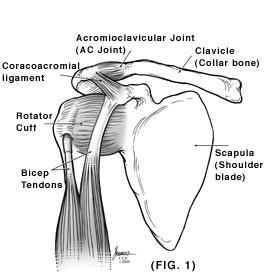
What is the rotator cuff?
The rotator cuff is a group of muscles and tendons in your shoulder. They help you lift and move your arms away from your body. The rotator cuff keeps the ball of the upper arm bone (humerus) in the shoulder blade socket.
What is a rotator cuff tear?
The shoulder is a ball-and-socket joint that’s part of the skeletal system. It’s like a golf ball sitting on a golf tee. Rotator cuff tears occur when tendons pull away from the arm bone. A tear may result from overuse or another injury.
What are the types of rotator cuff tears?
Types of torn rotator cuffs include:
- Partial: With an incomplete or partial tear, the tendon still somewhat attaches to the arm bone.
- Complete: With a full-thickness or complete tear, the tendon separates completely from the bone. There’s a hole or rip in the tendon.
How common are rotator cuff tears?
More than two million Americans experience some type of rotator cuff problem every year. Rotator cuff tears affect people of all ages and genders, but the problem is more common in adults.
What causes a rotator cuff tear?
An accident, such as a fall, can cause a broken collarbone or dislocated shoulder that tears the rotator cuff.
More commonly, rotator cuff tears occur over time as the tendon wears down with age and use (degenerative tear). People over 40 are most at risk.
Causes of degenerative tears include:
- Bone spurs: Bony growths can form on the top of the shoulder bone. These bone spurs rub against the tendon when you lift your arm. This shoulder impingement creates friction between the bone and tendon. Eventually, a partial or complete tear may occur.
- Decreased blood flow: Blood flow to the rotator cuff decreases as you get older. Your muscles and tendons need a healthy blood supply to repair themselves. If blood doesn’t nourish the tendons, they can tear.
- Overuse: Repetitive shoulder movements during sports or on the job can stress muscles and tendons, causing a tear.
What are risk factors for rotator cuff tears?
Anyone can experience a rotator cuff tear. These factors may increase your risk:
- Family history of shoulder problems or rotator cuff injuries.
- Poor posture.
- Smoking.
- Being age 40 or older.
Degenerative tears are more common among people who do the same repetitive shoulder movements, such as:
- Carpenters.
- Mechanics.
- Painters.
- Recreational and professional athletes who play baseball, softball and tennis or are part of a rowing crew.
Do rotator cuff tears affect both shoulders?
Tears tend to occur on your dominant side, but can be on either side. Having a tear in one shoulder increases the likelihood of a tear in the opposite shoulder. You might not have shoulder pain on the opposite side, but tests may indicate a tear. The opposite may also be true: you may have a tear but have no pain or symptoms.
What are the symptoms of a rotator cuff tear?
Sudden tears from accidents cause immediate, intense shoulder pain and arm weakness. With degenerative tears, you may have mild pain that improves with over-the-counter pain relievers. Over time, the pain gets worse, and pain relievers don’t help. Not everyone has pain, but most people have some degree of arm and shoulder weakness.
Signs of a rotator cuff tear include:
- Difficulty and pain caused by raising your arm.
- Popping or clicking sounds or sensations when moving your arm.
- Shoulder pain that worsens at night or when resting your arm.
- Shoulder weakness and struggling to lift items.
How is a rotator cuff tear diagnosed?
Your healthcare provider will perform a physical exam to check for shoulder tenderness, range of motion and arm strength.
To confirm a diagnosis, you may get:
- AnX-ray to check for arthritis or bone spurs.
- An MRI or ultrasound to look for tendon tears.
What are the complications of a rotator cuff tear?
A rotator cuff tear can get worse without treatment. A complete tear can make it almost impossible to move your arm. Without treatment, you may have chronic shoulder pain and find it very difficult to use the injured arm.
What are nonsurgical treatments for rotator cuff tears?
Rotator cuff tears do not heal on their own without surgery, but many patients can improve functionally and decrease pain with nonsurgical treatment by strengthening their shoulder muscles. Just because there is a tear, does not necessarily mean a surgery is needed. About eight out of 10 people with partial tears get better with nonsurgical treatments. It can take up to a year for the condition to improve.
Nonsurgical treatments include:
- An arm sling and rest to give your shoulder time to heal. You may need to modify activities and stop certain work or sports for a period of time.
- Nonsteroidal anti-inflammatory drugs (NSAIDs) to minimize pain and swelling.
- Physical therapy to learn strengthening and stretching exercises.
- Steroid injections to ease pain and swelling.
What are the surgical treatments for rotator cuff tears?
Your healthcare provider may recommend surgery if you have a complete tear or nonsurgical treatments don’t help a partial tear. You may also have surgery if your job or athletic interests affect the shoulder.
Most rotator cuff surgeries take place arthroscopically through small incisions. The surgery is an outpatient procedure. You go home the same day, but the overall recovery after this surgery is very substantial and can take up to a year or more.
Some tears are not repairable due to the size and/or age of the tear, and may necessitate reverse shoulder replacement, tendon transfer, or a debridement of scar tissue without repair.
During surgery, your healthcare provider:
- Inserts an arthroscope (small camera) through a small incision in your shoulder.
- Refers to images from the arthroscope to perform the procedure.
- Inserts tiny instruments into small incisions in your shoulder to remove bone spurs and reattach the tendon to the upper arm bone.
For a partial tear, your healthcare provider may only need to trim fraying pieces of a partially torn tendon. This debridement procedure keeps the shoulder ball and socket from catching on the tendon and tearing it more.
After surgery, you need to wear a sling to immobilize your arm for four to six weeks. You can then start physical therapy. Most people regain shoulder function and strength within four to six months after surgery, but full recovery may take up to 12-18 months.
How can I prevent a rotator cuff tear?
To prevent a rotator cuff tear, it’s important to keep your muscles and tendons flexible. Your healthcare provider can teach you stretching and strengthening exercises to do at home.
What is the prognosis (outlook) for people who have a rotator cuff tear?
Most people see improvements with nonsurgical treatments. Recovery takes time because your body needs time to heal. Most people who have surgery to repair a torn rotator cuff regain function.
It’s possible to tear the same tendon again, especially if the first tear was bigger than 1 inch. A re-tear that causes severe pain or loss of movement may require surgery.
When should I call my healthcare provider?
You should call your healthcare provider if you experience:
- Chronic shoulder and arm pain.
- Pain that worsens at night or interferes with sleep.
- Redness, swelling, or tenderness in the shoulder joint area.
- Shoulder or arm weakness.
What questions should I ask my healthcare provider?
You may want to ask your healthcare provider:
- What caused the rotator cuff tear?
- What is the best treatment for me?
- What can I do to lower the risk of getting another rotator cuff tear?
- Should I look out for signs of complications?
- Which signs of complications?
A note from Cleveland Clinic
If you work a very physical job or you’re an athlete, a rotator cuff injury will likely bench you, but it doesn’t have to be the end of your career. Talk to your healthcare provider about the best treatment options, whether nonsurgical or surgical. Your shoulder may be weak and painful for a while, but it will eventually heal.