

What is extrahepatic bile duct cancer?
Extrahepatic bile duct cancer is a rare disease in which malignant (cancer) cells form in the part of the bile duct that is outside your liver. Bile duct cancer itself is called cholangiocarcinoma. Extrahepatic means "outside the liver," so this type of cancer refers to cancer that begins in the bile duct outside your liver.
What do the bile ducts have to do with the liver?
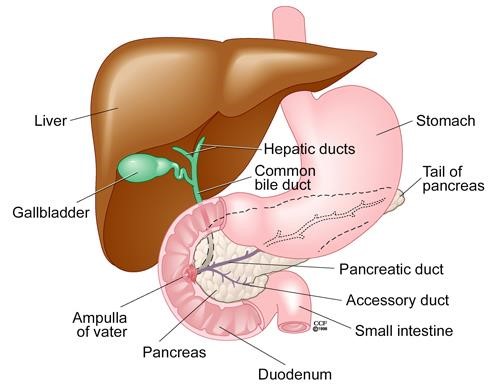
A network of bile ducts (tubes) connects your liver and gallbladder to your small intestine. The liver makes bile, a fluid that breaks down fats when food is digested. The bile ducts collect the bile inside your liver. The smaller ducts come together to form the right and left hepatic bile ducts, which lead out of the liver. Outside of your liver, the right and left sides come together to form what is called the common bile duct. The duct of the gallbladder joins this duct and finally drains into a part of your small intestine (duodenum). During the digestion process, bile stored in your gallbladder is released through the common bile duct into the small intestine.
Are there different types of extrahepatic bile duct cancer?
Cancer is sometimes named by or for where it starts. There is a type of extrahepatic bile duct cancer that is called perihilar (or hilar) bile duct cancer. This type begins at the point where the bile duct leaves the liver and comes outside.
There is another type called distal bile duct cancer. This type is located farther away from the liver and closer to the small intestine and the pancreas.
What causes extrahepatic bile duct cancer?
Although the actual cause of extrahepatic bile duct cancer isn’t known, having certain conditions can increase your risk of developing it. These conditions include.
- Liver diseases, including primary sclerosing cholangitis, hepatitis and cirrhosis.
- Chronic ulcerative colitis.
- Choledochal cyst, a congenital condition that may cause bile to back up into the liver.
- Clonorchiasis, a disease caused by being infected by clonorchis sinensis, a parasite found in waters in Asia.
- Obesity.
- Exposure to chemicals like nitrosamines and dioxins.
What are the symptoms of extrahepatic bile duct cancer?
If you have extrahepatic bile duct cancer, you may have symptoms from the cancer or from another, possibly related, condition. Symptoms include:
- Jaundice (yellowing of the skin or whites of the eyes).
- Pain in the abdomen.
- Fever.
- Itchy skin.
- Unintentional weight loss.
How is extrahepatic bile duct cancer diagnosed?
After giving you a physical exam and taking a complete medical history, your healthcare provider may order the following tests if they suspect extrahepatic bile duct cancer:
- Imaging tests (tests that show pictures). These tests include may ultrasound, CT scans (CAT scan, computed tomography), MRI (magnetic resonance imaging) scans, PET scans (positron emission tomography scan), ERCP (endoscopic retrograde cholangiopancreatography) and PTC (percutaneous transhepatic cholangiography).
- Biopsy.
- Liver function tests.
- Tumor marker tests on blood, urine or tissue.
How is extrahepatic bile duct cancer treated?
Treatment will depend on your individual circumstances including your health and the location and stage of the cancer. In addition to standard or conventional treatment, you may have the opportunity to be part of a clinical trial exploring new therapies.
In general, extrahepatic bile duct cancer is treated in three ways: surgery, radiation therapy and/or chemotherapy.
If you’re fit to have surgery, and the tumor can be removed, your healthcare provider will recommend this option. Complete tumor removal is possible in about 25% to 30% of cancers in the lowermost bile duct close to the pancreas. This figure is lower for other areas of the bile duct.
There are some treatments that are solely aimed at improving your quality of life. These include inserting stents to help with blockages, or rarely, nerve blocks to control pain.
How can I prevent extrahepatic bile duct cancer?
Since we don’t really know what causes extrahepatic bile duct cancer, there is no way to prevent it. However, in general, it’s a good idea to maintain a healthy lifestyle by eating well and getting enough exercise. If you have other health conditions, like diabetes, stay as healthy as you can. It’s wise to avoid excess drinking and avoid drug use, which could help you avoid developing hepatitis and cirrhosis.
What is the outlook (prognosis) for extrahepatic bile duct cancer?
The only cure for extrahepatic bile duct cancer happens when the cancer can be completely removed.
The outlook for other cases depends on several factors, including overall health, how early the cancer is found and whether it has spread outside of the bile duct (metastasized).
The five-year survival rate for extrahepatic bile cancer is 10%. This number refers to the number of people who are alive five years after the cancer is found. Remember, though, that these numbers are merely estimates based on reported information.
When should I contact my healthcare provider about extrahepatic bile duct cancer?
If you have symptoms that are worrying you, such as itchy skin or yellow skin and eyes, you should contact your healthcare provider. Make sure you contact your provider if you have new symptoms or symptoms that get worse. You might want to keep a list of questions you have and make sure you get the answers that you need. Questions might include:
- What kind of side effects come with treatment?
- What does my diagnosis mean for me?
- Am I eligible for a clinical trial?
- Where can I get more information or support for myself and my family?
A note from Cleveland Clinic
Cancer is a scary word for many of us. It’s important to remember that there are treatments that exist now and newer therapies being developed. Paying attention to how your body works and feels and sharing this information with your healthcare team is to your benefit. Keep scheduled appointments and follow the instructions of your healthcare provider. Take advantage of all of the resources you can find to help you get the most from every day.