

What is giant cell arteritis (GCA) and polymyalgia rheumatica (PMR)?
Giant cell arteritis causes inflammation that damages the arteries (blood vessels that carry blood and nutrients from the heart to tissues in the body). The large- and medium-sized arteries are affected.
Because some of the affected arteries provide blood to the head (cranium), including the temples, the condition may also be called cranial or temporal arteritis.
Polymyalgia literally means "many muscle pains." Rheumatica means "changing" or "in flux."
Who is affected by giant cell arteritis (GCA) and polymyalgia rheumatica (PMR) ?
Polymyalgia rheumatica (PMR) and giant cell arteritis (GCA) frequently affect the same types of people. The diseases may occur independently or in the same patient, either together or at different times.
People over 50 years old are typically affected with PMR and GCA. The average age of patients is 74. One-third of patients with GCA also have PMR.
Both diseases are two to three times more common in women than men, and there is a higher incidence among Caucasians than any other ethnic group.
Can other problems be confused with polymyalgia rheumatica (PMR) ?
Other illnesses that may be confused with PMR include:
- Rheumatoid arthritis
- Infections such as the flu
- Inflammation of blood vessels (vasculitis)
- Metabolic (chemical and hormone) abnormalities
- A variety of muscle diseases
- Cancer and many other diseases
What causes polymyalgia rheumatica (PMR) and giant cell arteritis (GCA)?
The exact cause of these illnesses is unknown.
What are the symptoms of giant cell arteritis (GCA)? How often do they occur?
- Atypical severe headaches are the most common symptom and occur in over 80% of patients.
- Scalp tenderness, fatigue, fevers and a general sense of illness occurs in about 50% of patients.
- Jaw or facial soreness, especially with chewing, also occurs in about 50% of patients.
- Vision changes or distorted vision caused by decreased blood flow occur in 15 to 50% of patients; blindness occurs in 5 to 15%.
- Stroke may occur in less than 5% of patients and is caused by decreased blood flow to the brain.
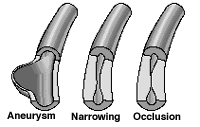
- The large blood vessels may become narrowed or enlarged (aneurysm); see figure. If narrowing occurs in the blood vessels leading to the arms or legs, patients may notice fatigue or aching in the limbs because of a reduced blood supply. Weak or absent pulses may be noticed by the doctor. These symptoms occur in 15 to 20% of patients.
A blood vessel can become inflamed and narrowed, or segments of a blood vessel can weaken and stretch (aneurysm). When aneurysms occur, they are usually present in the aorta, the body’s largest vessel that carries blood from the heart. When blood vessels become narrowed, there is restricted blood flow. If the blood vessel is completely blocked (occluded), there is no blood flow through that segment.
What are the symptoms of polymyalgia rheumatica (PMR)?
Pain or aching is usually felt in the large muscle groups, especially around the shoulders and hips.
Other symptoms may include:
- Stiffness, especially in the morning and after resting
- Weakness
- Fatigue
- Generally feeling ill
- Mild fevers (occasionally)
- Weight loss
How is giant cell arteritis (GCA) diagnosed?
The diagnosis of GCA is suspected when a patient presents with the above mentioned symptoms. Labs can be done which help with the diagnosis but are not diagnostic. The ESR (erythrocyte sedimentation rate) is a blood test that simply measures the rate at which red blood and other cells settle towards the bottom of a tube. A rapid or high rate usually correlates with ongoing inflammation. While the test is good, it is not perfect, and the diagnosis of GCA may sometimes be made even when this test is normal.
The only definitive way to make the diagnosis is with a temporal artery biopsy. A temporal artery biopsy involves a small incision being made at the temple and a piece of artery it extracted and examined under the microscope.
Once the diagnosis is suspected, treatment should be initiated promptly, the biopsy can be done after treatment has already been initiated. Treatment should not wait until after a biopsy is performed as complications of the disease can occur such as permanent vision loss.
Since there are so many illnesses that mimic polymyalgia rheumatica (PMR), how is it diagnosed?
PMR is diagnosed after:
- Careful evaluation of a person's medical history with an emphasis on the presence of pain, aching and stiffness in the shoulder, pelvic, and hip region, usually worse in the morning and improving with activity.
- A complete physical exam. During the exam, the presence of common PMR features and those of other possible illnesses are evaluated.
- Excluding the possibility of other illnesses. Blood test results may show distinct abnormalities typical of other diseases that would suggest different diagnoses.
- Evaluating the results of blood tests. A high erythrocyte sedimentation rate (ESR) is common among patients with PMR, but is not always present.
- Quick recovery and disappearance of symptoms after treatment with low-dose corticosteroids.
How are polymyalgia rheumatica (PMR) and giant cell arteritis (GCA) treated?
There is no known cure for PMR and GCA, but these diseases can be treated and controlled.
Corticosteroids. Corticosteroid treatment helps rapidly relieve symptoms of both PMR and GCA. Treatment with corticosteroids is mandatory for GCA to prevent serious vascular complications such as blindness. Low doses of corticosteroids are often successful in treating PMR. Higher doses are often required to control GCA.
The excellent response to treatment is so uniform that the lack of dramatic improvement, within days, would make the diagnosis of GCA or PMR doubtful.
Corticosteroids (or "steroids") are man-made drugs that closely resemble cortisol, a hormone that your adrenal glands produce naturally. Some corticosteroid medications are cortisone, prednisone, and methylprednisolone. Prednisone is the most common steroid used to treat certain rheumatic diseases.
Steroids reduce the number of inflammatory cells and chemicals that cause these illnesses. Consequently, steroids minimize tissue damage. Steroids also reduce the normal activity of the immune system by affecting the protective functions of white blood cells.
The decision to prescribe steroids is always made on an individual basis. Your doctor will consider your age, presence of other illnesses, and medications you are taking. Your doctor will also make sure you understand the potential benefits and risks of steroids before you start taking them.
While taking steroids, it is important to keep all appointments with your doctor and the laboratory and have your blood pressure checked regularly. Because steroids increase your chance of developing an infection, report symptoms such as a cough, fever, or shortness of breath to your doctor.
Because steroids can make bones weak, patients with GCA or PMR should have bone density testing performed to determine if they require supplemental calcium, vitamin D, and other medications to keep their bones at maximal strength and prevent loss of density.
Long-term steroid treatment (for a few months to several years) requires additional testing and monitoring. The potential side effects caused by long-term steroid therapy should be discussed with your doctor.
Once disease control is achieved, your doctor will slowly reduce prednisone to the lowest effective dose to control symptoms. In some patients there may not be any steroid requirement at all after 6 to 12 months of therapy.
Some studies have demonstrated that the risk of vascular complications is decreased among patients who also take one low-dose aspirin a day. Patients who are unable to take aspirin include those with aspirin allergy or others who are receiving anticoagulation-related medications (blood thinners).
What is the long-term outlook for patients with polymyalgia rheumatica (PMR) and giant cell arteritis (GCA)?
With careful monitoring and appropriate treatment, most patients with PMR or GCA have a normal life span and lifestyle. The success of therapy is related to prompt diagnosis, aggressive treatment, and careful follow-up to prevent or minimize side effects from the medications. The goal is to eventually taper the steroid dose down to a dose that minimizes side effects, or taper the steroids off completely.