

What is antiphospholipid syndrome?
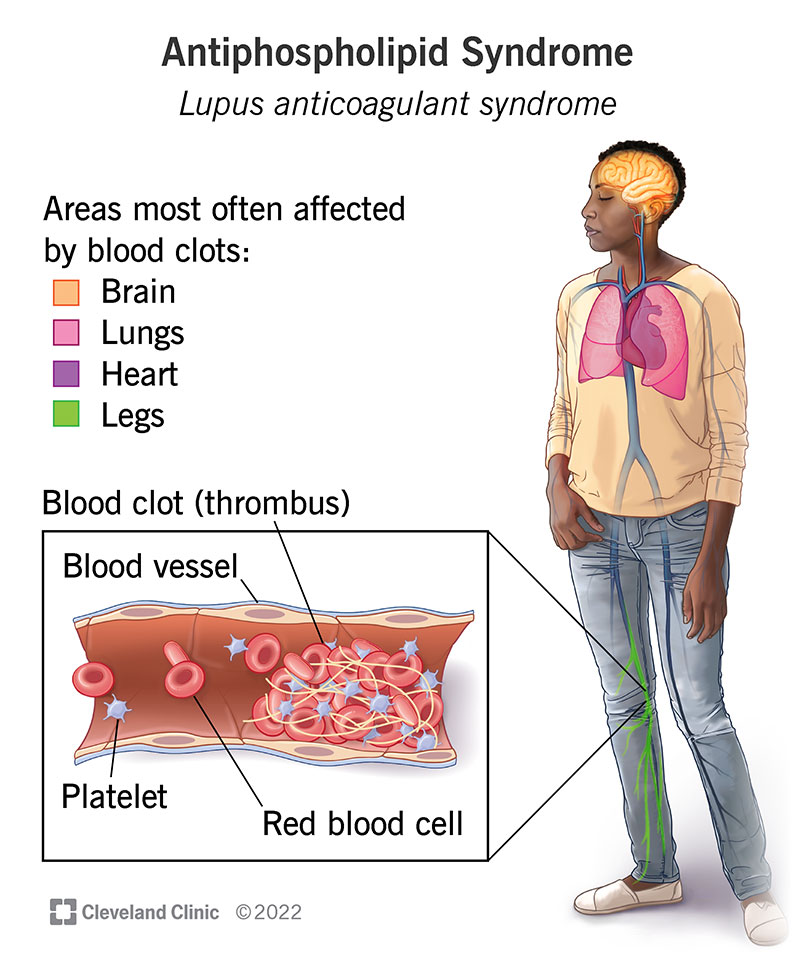
Antiphospholipid syndrome (aPL syndrome) is a rare autoimmune disorder. It causes blood clots (thromboses) to form in various parts of your body.
Blood clots can block the flow of blood, damaging tissues and organs. Also, blood clots can travel to your brain, heart or lungs, causing life-threatening problems.
The condition has several other names:
- Antiphospholipid antibody syndrome.
- Lupus anticoagulant syndrome.
- Anticardiolipin antibody syndrome (aCL syndrome).
- Hughes syndrome.
What are lupus anticoagulants and anticardiolipin antibodies?
Antibodies are proteins that are supposed to fight infection. But sometimes antibodies can mistakenly attack healthy cells.
Lupus anticoagulants and anticardiolipin antibodies are two examples. Both are types of antiphospholipid antibodies. Lupus anticoagulants, attack phospholipids (a type of fat that’s in all living cells). And anticardiolipin antibodies attack cardiolipins (found in the outer layer of cells and in platelets).
Who might get antiphospholipid antibody syndrome?
Anyone can have aPL syndrome. But for unknown reasons, it’s more common in people assigned female at birth (AFAB) and those with other autoimmune disorders, such as lupus.
What causes Hughes syndrome?
It’s not clear what causes antiphospholipid syndrome, but scientists suspect a combination of genetic and environmental factors. For some reason, a person with this disorder has antiphospholipid antibodies in the body. The antibodies damage cells, causing blood clots to form in the body’s arteries and veins.
What are the symptoms of lupus anticoagulant syndrome?
The symptoms of lupus anticoagulant syndrome depend on where the blood clots are. They can form anywhere in the body.
The areas usually affected, plus related symptoms, are:
- Brain: stroke, transient ischemic attacks (mini-strokes), seizures, shaking or involuntary muscle movements.
- Heart: chest pain, mitral valve regurgitation and heart attack.
- Legs: pain, swelling, redness, warmth, sores or ulcers.
- Lungs: trouble breathing, sudden chest pain, exhaustion, high blood pressure in the pulmonary arteries, pulmonary embolism, even sudden death.
Other signs may include:
- Blotchy patches of discolored skin (livedo reticularis).
- Discomfort in the arms, back, neck or jaw.
- Headaches.
- Nausea.
- Thrombocytopenia (low levels of blood platelets), which can cause easy bruising and longer episodes of bleeding.
- Skin rashes.
- Tissue death (gangrene) in the fingers or toes.
Antiphospholipid syndrome can also cause problems in pregnancy, such as:
- Delayed fetal development.
- Miscarriages.
- Preeclampsia.
How is antiphospholipid syndrome diagnosed?
To diagnose antiphospholipid antibody syndrome, a healthcare provider will:
- Perform a physical exam.
- Ask you about your symptoms and medical history.
- Order blood tests. A lab will measure the time it takes for a sample of your blood to clot under different situations.
To be diagnosed with antiphospholipid syndrome, you must have both:
- Presence of antiphospholipid antibodies in your body.
- Related health problems.
How is antiphospholipid syndrome treated?
There’s no cure for antiphospholipid syndrome. Treatment aims to prevent blood clots from forming.
Some people with mild cases may not need treatment. Others may only need daily aspirin to thin the blood and prevent clots. But others may need stronger blood thinners, such as heparin and warfarin.
Will I need to see special healthcare providers to treat antiphospholipid antibody syndrome?
Treatment for this condition might include specialists such as:
- Hematologist, who specializes in blood disorders.
- Rheumatologist, who specializes in disorders that affect the joints, bones and muscles.
How can I prevent lupus anticoagulant syndrome?
You can’t prevent the autoimmune condition, but certain lifestyle changes can lower your chances of developing blood clots:
- Quit smoking and using tobacco products.
- Don’t use oral contraceptives (birth control pill).
- Manage other medical conditions such as high blood pressure (hypertension) and diabetes.
What is the outlook for people with anticardiolipin antibody syndrome?
The outlook for antiphospholipid syndrome depends on how severe the condition is.
Catastrophic antiphospholipid syndrome (also called CAPS or Asherson’s syndrome) is a rare kind of antiphospholipid syndrome. Blood clots form in several organ systems and can cause life-threatening multi-organ failure.
But many cases of antiphospholipid antibody syndrome can be managed with anticoagulants (blood thinners) and lifestyle changes.
When should I seek medical attention for lupus anticoagulant syndrome?
Blood thinners increase the risk of bleeding, including inside the body. It’s important to know the signs of bleeding. Get medical help right away if you experience:
- Confusion or memory loss.
- More menstrual (period) blood flow than usual.
- Pain in your belly or head.
- Red or black poop.
- Sudden loss of movement in your limbs.
- Unexplained bleeding from your nose or gums.
- Vision changes.
- Vomit that’s red or looks like coffee grounds.
A note from Cleveland Clinic
Antiphospholipid syndrome can cause dangerous blood clots to form anywhere in the body. If you have any signs of blood clots, talk to a healthcare professional. Simple blood tests can diagnose the condition. Blood thinners and lifestyle changes can help prevent blood clots and their complications.