

What are flat nipples?
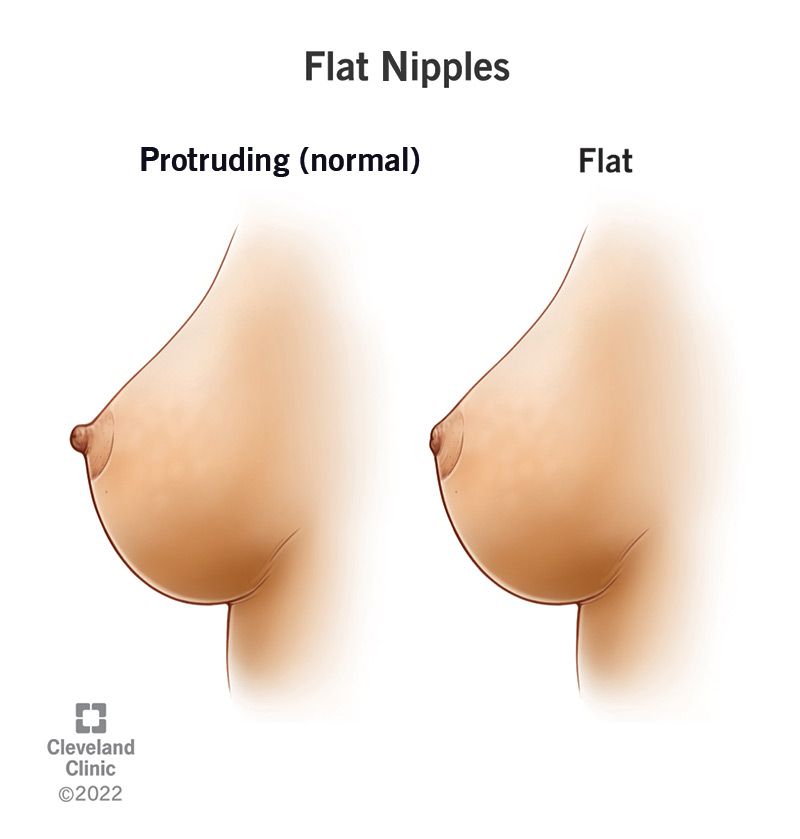
Flat nipples lay level with your areola, the tissue encircling your nipple, and the rest of your breast. They’re a harmless variation of the way that healthy nipples can look. Nipples may be:
- Protruding: Nipples stick out against the surrounding breast tissue.
- Flat: Nipples lay flat and are even with the surrounding breast tissue.
- Inverted: Nipples pull inward and are tucked inside the surrounding breast tissue.
Nipples that lay even with the surrounding skin but then protrude when stimulated aren’t considered flat. True flat nipples don’t become erect even if they’re squeezed, stimulated or exposed to cold. They often start to become slightly raised during pregnancy.
Should nipples be flat?
Most people have nipples that protrude. Because they’re in the majority, protruding nipples are considered “normal.” But healthy nipples can be flat, too.
What is the difference between flat and inverted nipples?
Flat and inverted nipples are variations of what’s considered a normal (protruding) nipple. In rare instances, inverted nipples may be a sign of a serious condition — especially if your nipples invert suddenly or if a nipple inverts only on one side. Usually, you’re just born with flat or inverted nipples.
The “pinch test” is a good way to tell if your nipples are flat or inverted. Gently pinch the skin of your areola about an inch behind your nipple. If your nipple doesn’t stick out, it’s flat. If your nipple pulls inward, it’s inverted.
Flat and inverted nipples are usually harmless, but they can make breastfeeding (chestfeeding) more difficult. Guidance from your provider or a lactation consultant can help.
How common are flat nipples?
About 10% to 20% of people have flat or inverted nipples.
What causes flat nipples?
Flat nipples may make you feel self-conscious about your appearance because they’re less common than protruding nipples, but they’re likely harmless. Causes for flat nipples include:
- Nipple development in the womb: Your nipples developed while you were still a fetus. They may appear flat because your nipple base is small or because your milk ducts didn’t fully form while you were in the womb.
- Aging-related breast changes: Your breasts change as you age. Around your mid-30s, your milk ducts may shorten as your body prepares for menopause. Shortening ducts may cause your nipples to gradually lay flat or invert.
- Pregnancy: Your nipples may flatten as your breasts become filled with milk during pregnancy.
- Paget’s disease: Paget’s disease is a rare form of cancer that starts in the nipple. If breast cancer is causing your nipples to change, you’ll likely notice other symptoms, too, like pain in your breast, flaking, or an abnormal discharge.
- Engorgement: Sometimes engorgement can cause the appearance of flat nipples and this resolves once the swelling goes down. Reverse pressure softening and lymphatic massage can both relieve engorgement.
- Cancer: Very rarely, cancer can cause inverted nipples. If the inversion is new or asymmetrical it may require further imaging.
See your provider if you notice sudden changes in your nipples, especially a change that affects one nipple and not the other.
How are flat nipples diagnosed?
Your provider will do a physical exam to determine whether your nipples are a sign of a breast condition. If there’s a question, they may order a mammogram, an ultrasound or an MRI to check your breast tissue for any abnormalities. If your provider suspects cancer, they may perform a needle biopsy to take a sample of your breast tissue and have it tested for cancer cells in a lab.
How do you fix flat nipples?
Flat nipples usually don’t require treatment unless they make you unhappy with your appearance. In that case, the only permanent fix is surgery. But, surgery may not help with breastfeeding.
How can I prevent flat nipples?
You can’t prevent your nipples from looking a certain way, but you can speak to your provider about cosmetic solutions if you’re unhappy with their appearance.
Can I breastfeed with flat nipples?
Yes. But in the beginning, you may need guidance from your provider or a lactation consultant to learn proper breastfeeding techniques. The good news is that your baby should latch to your areola — not your nipple — to breastfeed. Having flat or inverted nipples shouldn’t prevent you from breastfeeding.
Here are some tips to make it easier to breastfeed with flat nipples:
- Begin breastfeeding before your milk fully comes in. Breastfeeding early will help your baby get used to latching. It will lessen any discomfort you may feel from having overly full breasts. Your breasts are softer before your milk comes in, making it easier for your baby to latch.
- Avoid giving your baby pacifiers or allowing them to feed from artificial nipples. Get them comfortable suckling from your breast.
- Your baby is usually the best tool for drawing your nipples out. Many breastfeeding challenges attributed to flat or inverted nipples are often due to other causes. Your provider may recommend seeing a lactation consultant or breastfeeding medicine physician for assistance.
- Nipples are an erectile tissue and occasionally moms find stimulation from a pump, rolling the nipple between their thumb and index fingers, or application of a cold washcloth before feeding draws the nipple out more making latching easier. Special devices designed to draw out nipples, including shells, have not been shown to increase breastfeeding rates and may cause more harm to the nipple/breast.
- Pull your breast tissue inward, toward your body, to help nudge your nipple out.
Ask your provider about their recommendations when it comes to using nipple shields.
When should I see my provider?
See your provider if you’re concerned about sudden changes to your nipples, especially if you’re experiencing symptoms that may indicate breast cancer.
Get help from your provider or a lactation consultant if you’re having trouble breastfeeding. Schedule an appointment if your baby isn’t:
- Producing five to six wet diapers a day.
- Satisfied after breastfeeding.
- Having three stools a day.
- Gaining weight.
What questions should I ask my provider?
- How do I know if my baby is getting enough nourishment from breastfeeding?
- What techniques would you recommend for getting my newborn to latch?
- Should I see a lactation expert?
A note from Cleveland Clinic
Flat nipples are a normal variation of healthy nipples. You shouldn’t be self-conscious if your nipples don’t protrude. If you’d like to breastfeed but your nipples are making it difficult, reach out to your provider or a lactation consultant. Breastfeeding can be challenging at first for new parents. With proper guidance, there’s no reason you shouldn’t be able to nurse and experience this bonding experience with your newborn.