

What is hip dysplasia?
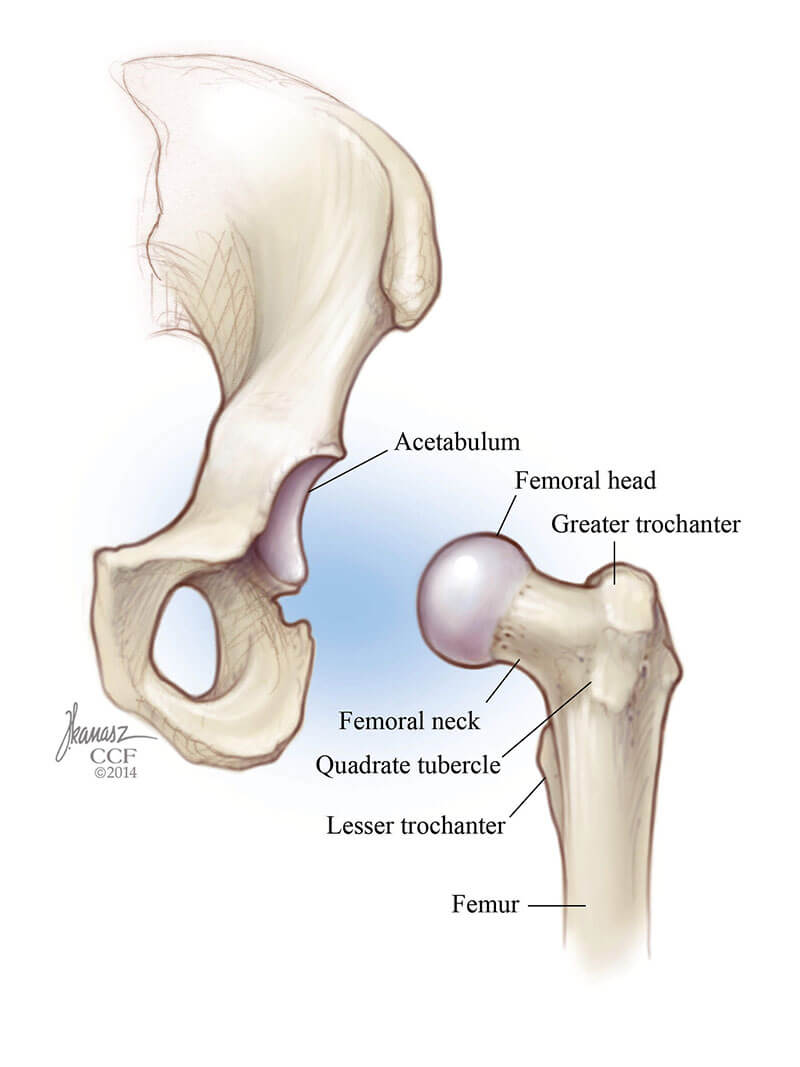
Hip dysplasia is an abnormality in the hip joint. In people with this condition, the femur (thigh bone) does not fit together with the pelvis as it should.
Hip dysplasia can damage the cartilage, the tissue that cushions these bones in the joint. It can also cause pain and issues, ranging from an unstable joint to dislocation (the bone slides out of place in the joint).
How common is hip dysplasia?
About 1 of every 1,000 babies is born with hip dysplasia. Girls and firstborn children are more likely to have the condition. It can occur in either hip, but is more common on the left side.
What causes hip dysplasia?
The hip joint is a ball-and-socket configuration that attaches the femur to the pelvis. In people with hip dysplasia, the femoral head (top of the femur) does not line up properly with the curved socket in the pelvis. In some cases, the socket is not deep enough to hold the femoral head in place.
Most people who have hip dysplasia were born with the condition. Hip dysplasia can develop if the position of the developing fetus puts pressure on the hips. It can also be genetic (passed down in families).
When people are born with this condition, it is called developmental dysplasia of the hip or congenital hip dislocation.
What are the signs and symptoms of hip dysplasia?
Signs and symptoms of hip dysplasia include:
- Pain in the hip.
- Loose or unstable hip joint.
- Limping when walking.
- Unequal leg lengths.
How is hip dysplasia diagnosed?
The doctor will perform a physical exam to check for hip dysplasia in the first few days of a baby’s life and again after about two months. Signs of the condition may not show up until a child is older.
X-rays, ultrasound and CT scans can confirm a diagnosis in children who are older than 6 months. These tests enable doctors to see inside the hip joint to identify the abnormality and look for signs of damage.
How is hip dysplasia treated?
Treatment for hip dysplasia involves managing pain and protecting the hip joint from further damage. The doctor will tailor the treatment to meet the patient’s specific needs.
Treatment options for hip dysplasia include:
- Brace: For babies under 6 months old, doctors may use a brace or harness to hold the joint in place while the child grows.
- Physical therapy: Exercises can strengthen the joint and improve flexibility (ability to move the joint).
- Surgery: In many cases, doctors repair the hip joint with operations such as: arthroscopy (a minimally invasive procedure to repair a torn labrum, the layer of cartilage around the hip socket); periacetabular osteotomy (repositions the femur into the hip socket); or, total hip replacement (restores the hip with an artificial joint).
What complications are associated with hip dysplasia?
If hip dysplasia is not treated, it can cause painful long-term problems, including:
- Hip labral tear: Damage to the cartilage that lines the socket of the hip joint.
- Osteoarthritis: Cartilage damage that causes hip pain and stiffness.
- Dislocated joint: Bones slide out of place in the joint.
- Unstable joint: Looseness in the joint that causes pain and weakness.
Can hip dysplasia be prevented?
Most cases of hip dysplasia cannot be prevented. To reduce the risk of hip dysplasia after birth, avoid wrapping your baby up too tightly.
What are the risk factors for hip dysplasia?
People at higher risk for hip dysplasia include those who:
- Have family members with the condition.
- Are female.
- Are firstborn.
- Were born in the breech position (bottom first instead of head first).
What is the prognosis (outlook) for people who have hip dysplasia?
Surgery for hip dysplasia often corrects the problem. Many people who receive successful treatment go on to live healthy lives without hip pain.
When can I go back to my regular activities after surgery for hip dysplasia?
People who have surgery for hip dysplasia usually stay in the hospital for a few days. You should be able to bear weight on the joint at six weeks to three months. You may not be able to put full weight on the joint for up to three months after surgery to allow the hip to heal.
Your doctor will watch your progress and let you know when you can begin therapeutic exercises. These activities will strengthen the joint to help you return to your usual activities.
When should I call the doctor about hip dysplasia?
Contact your doctor if you or your baby shows signs of hip dysplasia. Teenagers and older patients should contact their doctors if they have hip pain.
What questions should I ask my doctor about hip dysplasia?
If you have hip dysplasia, you may want to ask your doctor:
- How will hip dysplasia affect my home and work life?
- What are my treatment options?
- What are the risks and benefits of having surgery?