

What is a hip labral tear?
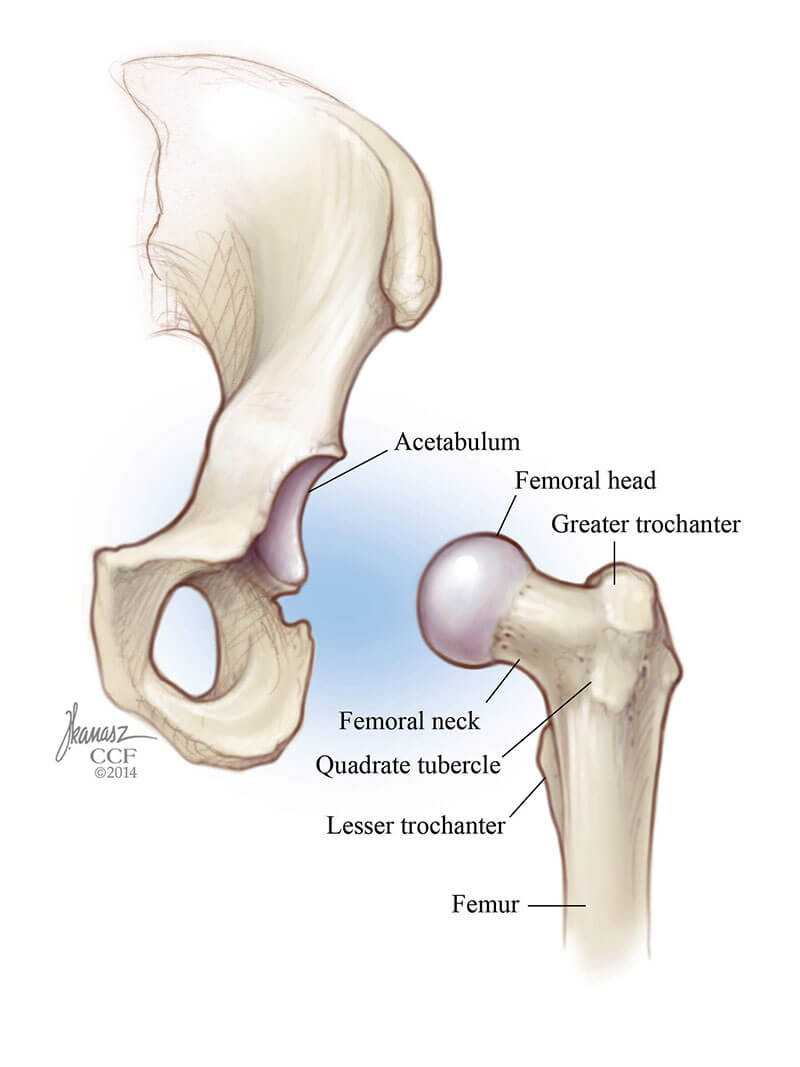
The hip is shaped like a ball-and-socket. The socket is called the acetabulum, and the ball is the femoral head, located at the top of the femur (leg bone). A hip labral tear is an injury to the labrum, the soft tissue that covers the acetabulum.
The labrum helps the femoral head move smoothly within the socket. It lets your hip move without problems or pain. It also serves as a seal, keeping the ball and socket together but not touching.
What causes a hip labral tear?
Hip labral tears can be caused by many things, including the following:
- Structural ailments: Conditions that cause abnormal hip movement can also lead to hip labral tears. In femoroacetabular impingement (FAI), the femoral head doesn’t fit into the socket properly. This imperfect fit can cause long-lasting groin pain and movement limitations. This is the most common cause of labral tears. FAI can affect people at any age. Without treatment, it can result in osteoarthritis in some patients.
- Injury: Trauma to the hip can lead to a hip labral tear. This can happen to people who play certain sports that have repetitive and high-impact movements, such as ice hockey, football, soccer and golf.
- Degenerative health conditions: Osteoarthritis is a chronic (long-term) wearing down of the cartilage between the joints. As cartilage slowly erodes over time, it becomes more prone to tearing. Older age and excessive weight can increase a person’s risk for developing osteoarthritis. People with osteoarthritis commonly have pain and stiffness in more than one joint (the hip and knee, for example).
What are the symptoms of a hip labral tear?
The symptoms of a hip labral tear include:
- Hip pain or stiffness
- Pain in the groin or buttocks area
- A clicking or locking sound in the hip area when you move
- Feeling unsteady on your feet
If you have a hip labral tear, hip pain or discomfort may get worse when you bend, move or rotate the hip, or exercise or play sports. It’s also possible to have a hip labral tear with no symptoms at all.
How is a hip labral tear diagnosed?
To diagnose a hip labral tear, the doctor will do a physical examination. During the exam, the doctor may ask you to move your leg or walk around. How well you can move, and any pain you feel while moving, can help the doctor with the diagnosis.
Imaging tests can also help doctors diagnose a hip labral tear. The doctor may order the following imaging tests:
- X-rays: X-rays can alert doctors to problems with the hip bones, such as femoroacetabular impingement, or osteoarthritis, that may contribute to a labral tear and a painful hip.
- Magnetic Resonance Imaging (MRI): This test shows more details in soft tissues. An MRI can show where a labral tear is, and how severe it is.
How is a hip labral tear treated?
A hip labral tear won’t heal on its own, but rest and other measures can help manage symptoms of a minor tear. Nonsurgical treatments include:
- Anti-inflammatory medications: Over-the-counter pain relievers like ibuprofen (Motrin®, Advil®) can reduce inflammation.
- Medication injection: Doctors can inject medications, such as steroids, into the hip joint to ease symptoms.
- Physical therapy: Specific physical therapy exercises to stretch and strengthen the hip muscles may help relieve pain. Physical therapy usually requires a prescription from your doctor.
If symptoms persist or if the tear is severe, your doctor may recommend surgery. Surgery to repair a hip labral tear is usually done arthroscopically. This is a minimally invasive surgery in which the doctor makes small incisions (cuts) in the hip and uses miniature instruments to make the following repairs:
- Refixation or repair (stitching the torn tissue back together)
- Reconstruction (reconfiguring damaged tissue using healthy tissue from elsewhere on your body or from a donor)
- Debridement (removing a small piece of labral tissue)
If FAI is also present, it will be addressed (removed) at the same time to help prevent the labrum from tearing again.
The arthroscopic surgery is often done on an outpatient basis, meaning the patient goes home the same day.
What is the outlook for someone who has a hip labral tear?
How well a person heals from a hip labral tear depends on the specific injury and how it is treated:
- Conservative (nonsurgical) therapies: Treatments such as anti-inflammatory medications and physical therapy do not fix the tear itself. They can decrease pain and offer a workable option for some minor tears. Some people will need additional treatment later.
- Surgery: In many cases, hip arthroscopy can relieve pain from a labral tear and return hip function. Many people recover fully from surgery within 4 to 6 months, and can often return to previous athletic pursuits and physical activity.
- Osteoarthritis: Chronic conditions such as osteoarthritis must be managed by a doctor to prevent more severe symptoms.
When should I call the doctor about a hip labral tear?
While hip and joint pain usually isn’t life-threatening, it can significantly affect how you live your life. Any hip or groin pain that doesn’t go away after a few days should be evaluated by a medical specialist. If you have sudden or severe pain in the hip or groin, call your doctor right away.