

What is sacroiliitis?
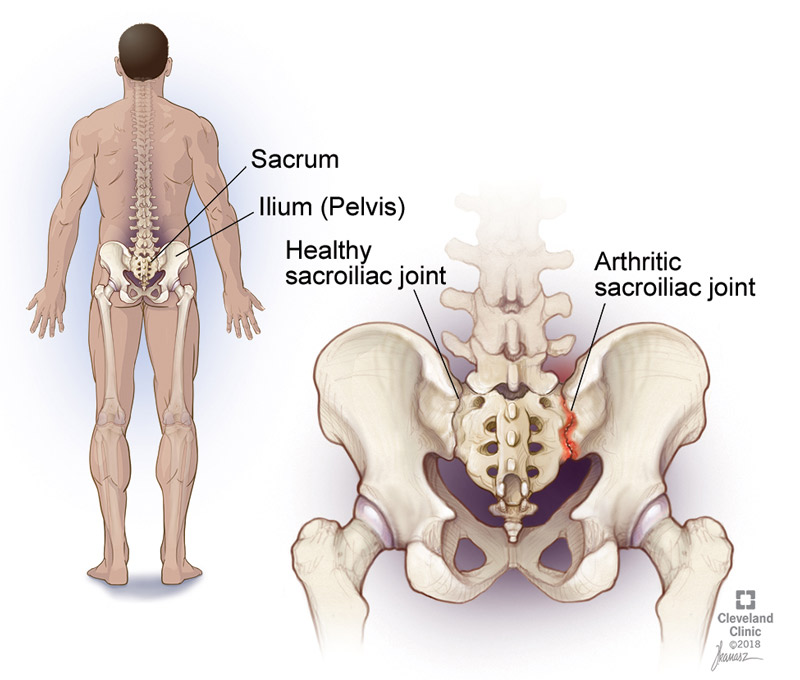
Sacroiliitis is the inflammation of one or both of your sacroiliac joints. These two joints are located where the sacrum (the triangular last section of the spine) meets the ilium (a part of the pelvis).
Sacroiliitis is a common source of lower back pain or pain in the buttocks or thighs. It is often difficult to diagnose since many other conditions cause pain in the same locations.
How common is sacroiliitis?
Doctors don’t know for sure how many people live with sacroiliitis. However, it has been estimated that between 10 percent and 25 percent of people who report low back pain may have sacroiliitis.
What causes sacroiliitis?
Inflammation of the sacroiliac joint causes most of the symptoms of sacroiliitis. Many medical conditions cause inflammation in the sacroiliac joint, including:
- Osteoarthritis -This type of wear-and-tear arthritis can occur in the sacroiliac joints and results from the breakdown of ligaments.
- Ankylosing spondylitis - This is a type of inflammatory arthritis of the joints of the spine. Sacroiliitis is often an early symptom of ankylosing spondylitis.
- Psoriatic arthritis - This inflammatory condition causes joint pain and swelling as well as psoriasis (scaly patches on the skin). Psoriatic arthritis can cause inflammation of the spinal joints, including the sacroiliac joints.
Other causes of sacroiliitis include:
- Trauma - A fall, motor vehicle accident, or other injury to the sacroiliac joints or the ligaments supporting or surrounding the sacroiliac joint can cause symptoms.
- Pregnancy - Hormones generated during pregnancy can relax the muscles and ligaments of the pelvis, causing the sacroiliac joint to rotate. The weight of pregnancy can also stress the sacroiliac joint and lead to wearing of the joint.
- Pyogenic sacroiliitis - This is a rare infection of the sacroiliac joint caused by the bacteria Staphylococcus aureus.
What are the symptoms of sacroiliitis?
Common symptoms of sacroiliitis include pain that:
- Occurs in the lower back, buttock, hip, or thigh
- Gets worse after long periods of sitting or standing, or getting out of a chair
- Worsens after rotating your hips
- Feels sharp or stabbing, or dull and achy
How is sacroiliitis diagnosed?
Your doctor will ask you about your medical history, including any previous inflammatory disorders or conditions. Other diagnostic tests include:
- Physical exam, movement tests - During the physical exam, the spine is examined for proper alignment and rotation. During various physical movement tests, you are positioned or asked to move in specific directions. In some of these tests, the doctor applies pressure to your sacroiliac joint, spine, hip, or leg. The greater the number of tests that are positive (bring on pain), the higher the likelihood that you have sacroiliitis.
- Blood work - Blood work looks for signs of inflammation.
- Imaging tests - X-rays, CT scans, and/or MRI scans may be ordered if the doctor suspects an injury as the source of pain or to look for changes in the sacroiliac joint.
- Steroid injection - An injection of steroids into the sacroiliac joint is both a diagnostic test – if it relieves pain – and a treatment. This procedure is performed using x-ray to guide the spinal needle to the appropriate location for the injection.
How is sacroiliitis treated?
Most people with sacroiliitis benefit from physical therapy. This treatment helps strengthen and stabilize the muscles surrounding your sacroiliac joints. Physical therapy also makes it easier for you to move your sacroiliac joints through full range of motion.
In some cases, doctors prescribe medications like NSAIDs (Advil®) to help manage pain in the early stages of sacroiliitis. In some cases, doctors inject steroids into your sacroiliac joints to help decrease inflammation and pain. Radiofrequency ablation is considered only if pain relief is temporarily achieved after sacroiliac joint injection. This procedure uses radio waves to heat a small area of nerve tissue to stop it from sending pain signals, thereby reducing pain.
What complications are associated with sacroiliitis?
Left untreated, sacroiliitis causes a loss of mobility for some people. Untreated pain also can disrupt your sleep and lead to psychological conditions like depression.
Sacroiliitis associated with ankylosing spondylitis can progress over time. Over time, this type of arthritis causes the vertebrae (bones) in your spine to fuse together and stiffen.
Can sacroiliitis be prevented?
There is no way to prevent sacroiliitis. You may be able to prevent or reduce symptoms by avoiding activities that cause the pain like running or stair climbing.
What are the outcomes after treatment for sacroiliitis?
With treatment, most people with sacroiliitis manage their pain and regain mobility.
When should I call my doctor?
If you have ongoing pain in the lower back, buttock, or thigh, contact your doctor for a thorough evaluation.