

What is Hashimoto’s disease?
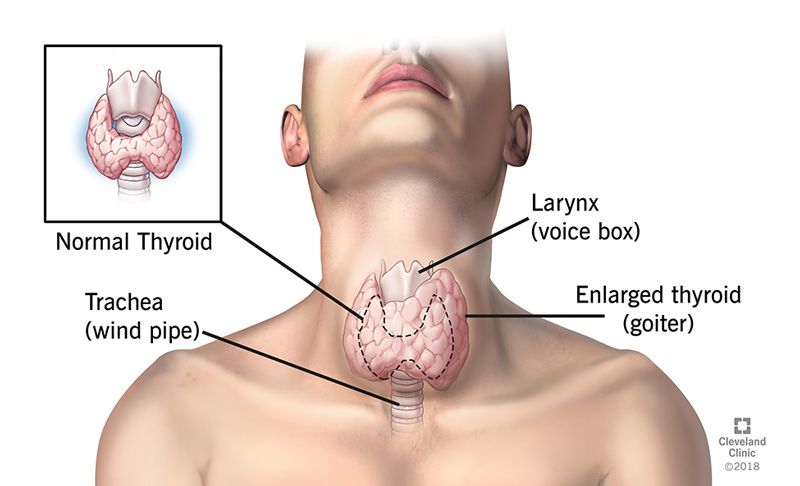
Hashimoto’s disease affects the thyroid gland. It’s also called Hashimoto’s thyroiditis, chronic lymphocytic thyroiditis or autoimmune thyroiditis. The thyroid gland makes hormones that regulate virtually all of the body’s metabolic functions (how the body turns food into energy) and keep it working normally. Hashimoto’s thyroiditis is a type of autoimmune disease — your immune system doesn’t recognize your thyroid as your own and attacks it.
Hashimoto’s disease is common and affects about five people in 100 in the United States.
What is hypothyroidism?
Hashimoto’s hypothyroidism happens when the thyroid gland doesn’t make enough thyroid hormones to meet the body’s needs because its immune system has damaged it.
Thyroid hormones regulate metabolism, which is how you turn food into energy. Without enough energy, your body cannot operate normally and its functions begin to slow down.
How does hypothyroidism affect your body?
Hypothyroidism can affect you in ways that can be hard emotionally and physically. For example:
- When your metabolism slows due to hypothyroidism, you eventually gain weight, feel tired more often and have little energy.
- You can experience fuzzy thinking and memory problems (hypothyroidism is often misdiagnosed as depression).
- Women can develop menstrual irregularity and change in flow, and find it harder to become pregnant.
- You may be increasingly constipated (trouble having a bowel movement), have heartburn and other digestive problems.
- Hypothyroidism can also lead to sexual dysfunction in both men and women.
A slow metabolism can affect almost every part of your body, with effects mild to severe.
Who is most likely to develop Hashimoto’s disease?
Hashimoto’s disease:
- Is more common in women than men.
- Commonly appears between the ages of 30 and 50.
- Tends to run in families (hereditary).
- Is more likely to develop in people who have other autoimmune diseases, like certain liver conditions, B12 deficiency, gluten sensitivity, rheumatoid arthritis, type 1 diabetes, lupus and Addison’s disease (an adrenal gland condition).
What causes Hashimoto’s disease?
Hashimoto’s disease is an autoimmune disease, which means the body’s immune system is attacking its own cells and organs. Normally, the immune system protects the body against infections caused by bacteria, viruses and other harmful substances.
In Hashimoto’s disease, the immune system makes antibodies that attack and damage the thyroid tissue. As a result, the thyroid gland becomes inflamed and the ability to make thyroid hormone becomes damaged, eventually leading to hypothyroidism.
What are the symptoms of Hashimoto’s disease?
Some people may not have any symptoms at first. As the disease slowly progresses, the thyroid gland becomes enlarged (a condition called a goiter). A goiter is a common first sign of Hashimoto’s disease. A goiter is painless, but can create a feeling of fullness in the throat, and can make the front of your neck look swollen.
Other symptoms of Hashimoto’s disease that develop over time include:
- Tiredness (fatigue).
- Weight gain.
- Feeling cold.
- Joint stiffness and muscle pain.
- Constipation (trouble having a bowel movement).
- Depression.
- Puffy eyes/face.
- Dry skin.
- Thinning hair/hair loss.
- Heavy or irregular periods.
- Difficulty becoming pregnant.
- Memory problems/difficulty thinking or concentrating.
- Slow heartbeat.
How is Hashimoto’s disease diagnosed?
First, your healthcare provider will take your medical history and perform a physical exam. He or she will feel your thyroid gland to determine if it is enlarged. Blood tests are also ordered. These include:
- Thyroid stimulating hormone (TSH) test: A high TSH level most commonly means the thyroid gland is not producing enough T4 hormone. This lab is usually most consistent with a diagnosis of hypothyroidism or subclinical hypothyroidism.
- Free T4 test: A low T4 level suggests that the person has hypothyroidism.
- Antithyroid antibody test: Presence of antibodies indicates a higher risk of developing Hashimoto’s hypothyroidism.
The most common imaging test that may be ordered is an ultrasound of your thyroid gland. The ultrasound shows the size and appearance of the thyroid and if there are any nodules or growths in your neck area.
Does Hashimoto’s disease always need treatment?
Not everyone with Hashimoto’s disease develops hypothyroidism. Because having antibody levels that are consistent with Hashimoto’s incur a higher risk of developing hypothyroidism, healthcare providers generally choose to monitor your condition and watch for any changes in your thyroid health.
How is Hashimoto’s disease treated?
If Hashimoto’s disease does progress to hypothyroidism, usual treatment is a synthetic (man-made) form of thyroid hormone called levothyroxine (Synthroid®, Tirosint®, Levoxyl®, Levothroid®, Unithroid®).
This drug restores the normal function of the thyroid. You’ll need to take it every day for the rest of your life. Your providers and you will figure out how to adjust your dose to make sure that your hypothyroidism is well-managed.
Will I need to have my thyroid removed for Hashimoto’s disease and hypothyroidism?
No. Because hypothyroidism and Hashimoto’s disease are managed by medications, surgery is not necessary.
Is there a special diet for people with Hashimoto’s disease?
There is no special diet for Hashimoto’s disease, but some foods, medicines or supplements may affect your ability to absorb levothyroxine, your thyroid medication. These include iron and calcium supplements, the ulcer medicine sucralfate, cholestyramine and aluminum hydroxide (found in some antacids). Taking these four hours before or after the levothyroxine may solve this problem.
Talk to your doctor about any dietary questions you have.
Eating well and a healthy lifestyle – exercising, sleeping well and managing stress – can help your immune system. No matter what, you’ll need to keep taking your medications if you are diagnosed with hypothyroidism.
Is Hashimoto’s disease dangerous or fatal?
If left untreated, hypothyroidism can lead to some serious complications and, in rare cases, death. These include:
- Heart problems, such as enlarged heart or heart failure.
- Mental health issues, including depression.
- Myxedema coma, which needs immediate emergency care. Myxedema is a rare, life-threatening condition that can lead to heart failure, seizures, coma and death.
What happens if I have hypothyroidism during pregnancy?
For pregnant women, there is a different thyroid stimulating hormone (TSH) goal. If your TSH level is not at goal, your provider will likely offer you treatment with synthetic thyroid hormone to protect the safety of your pregnancy and your baby.
Untreated hypothyroidism during pregnancy can increase the risk of miscarriage, premature birth and stillbirth. Or it may cause a dangerous rise in blood pressure in late pregnancy (called preeclampsia). Untreated hypothyroidism can also affect your baby’s growth and brain development. Your providers will work with you to make sure your hypothyroidism is well-managed during your pregnancy.
Hypothyroidism during pregnancy is not common. But sometimes symptoms of hypothyroidism can be overlooked during pregnancy, with its fatigue and weight gain. Let your providers know right away if you notice any hypothyroidism symptoms, or feel like you’re developing a goiter.
A note from Cleveland Clinic
In most cases, hypothyroidism can be managed as long as you take your daily medication and get blood tests to adjust the dosage as instructed by your healthcare provider. Eating healthy and getting enough exercise can help you live a long, healthy life with the condition. Your healthcare providers can tell you what steps to take to feel better along the way.