

What is mononeuropathy?
Mononeuropathy is damage that occurs to a single nerve. This damage can cause an individual pain, loss of movement and/or numbness.
Mononeuropathy can be caused by a variety of factors including trauma, compression and inflammation. These can lead to the covering of the nerve (the myelin sheath), the middle part of the nerve (the axon) or a combination of both. This condition blocks transmission of electricity through the nerve.
What nerves can be affected by mononeuropathy?
Technically, any individual nerve in the body can be affected by mononeuropathy. However, nerves that run close to the skin or near a bone are most likely to be affected. These include:
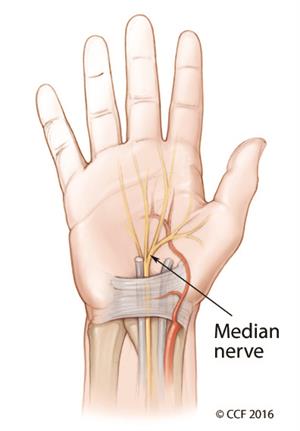
- The median nerve in the wrist. This causes the most common form of mononeuropathy, carpal tunnel syndrome.
- The ulnar nerve in the elbow.
- The radial nerve in the upper arm.
- The peroneal nerve just below the knee.
- The lateral femoral cutaneous nerve in the legs.
Who gets mononeuropathy?
Anyone can be affected by mononeuropathy. Any nerve that is subject to prolonged compression or other stress can be affected.
People with certain medical conditions such as diabetes may be at higher risk of developing mononeuropathy.
What causes mononeuropathy?
The causes of mononeuropathy vary depending on the affected nerves. It can be caused by repetitive motions, injury and long-term pressure on a nerve due to an injury or swelling. Injuries that can cause mononeuropathy include:
- Pressure from a poorly fit cast or crutches.
- Pressure from staying in a fixed position for a long time.
- Pressure on nerves caused when confined to bed or paralyzed.
- Injuries from radiation therapy.
What are the symptoms of mononeuropathy?
Symptoms of mononeuropathy vary depending on the affected nerve. The most common symptoms are:
- Loss of feeling in the affected area.
- Weakness in the affected area.
- Pain or burning.
- A feeling of “pins and needles.”
You should consult your doctor if you experience any of the above symptoms. Untreated mononeuropathy can lead to:
- Permanent weakness.
- Impaired dexterity.
- Permanent disability.
- Loss of sensation.
- Pain.
How is mononeuropathy diagnosed?
Your doctor will usually be able to diagnose mononeuropathy by listening to your symptoms and performing a physical evaluation.
Sometimes a procedure called electromyography (EMG) and nerve conduction velocities (NCV). These tests are done together to assess the nerve’s ability to conduct electricity appropriately. Other tests that may be performed may include a neuromuscular ultrasound or magnetic resonance imaging (MRI).
How is mononeuropathy treated?
Treatment for mononeuropathy depends on the type of nerves that are affected. Treatments include:
- Removal of pressure.
- Corticosteroid injections.
- Splints to immobilize the area.
- Treatment of any associated underlying medical condition.
- Surgery, when necessary, to relieve pressure if other treatments fail.
What is the prognosis for mononeuropathy?
It is important that mononeuropathy be treated when recognized. If caught early, long-term disability may be able to be avoided.