

What is anorectal manometry?
Anorectal manometry is a test that measures how well the rectum and anal sphincters work together to eliminate stool (feces).
The anal sphincter has an internal and external sphincter, or valve, which helps to control continence (passing) of stool. These valves are made of muscles that control the opening and closing of the anus. The test is performed to see how well it is working.
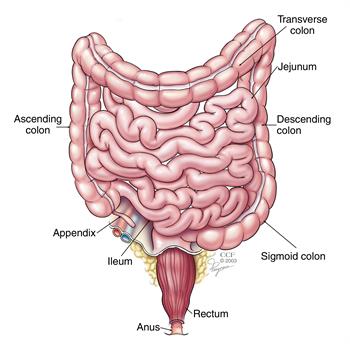
What are the parts of the lower digestive system?
The lower digestive system consists of the:
- Large intestine.
- Ascending colon.
- Transverse colon.
- Descending colon.
- Sigmoid colon.
- Rectum.
- Anus.
The end of the digestive tract is the rectum, which acts as a temporary storage area for feces or stool (the waste product of digestive system). The rectum holds the stool until defecation occurs. During defecation, stool is propelled out through the anus.
When would anorectal manometry be needed?
The anorectal manometry test is commonly given to people who have:
- Difficult passing stool.
- Fecal incontinence (can’t control bowels and this results in a leakage of feces).
- Constipation (less than three bowel movements a week).
- Hirschsprung’s disease in children (a disease that can cause a blockage in the large intestine).
How does the test work?
A small flexible tube (called a catheter) with a balloon on the end is inserted through the anal opening, past a ring of muscles called the anal sphincter before passing into the rectum. The small balloon at the tip of the catheter is gradually inflated. This causes the nerves and muscles in the rectum and anus to begin to squeeze. The end of the tube remains outside of the anus. It is connected to a machine that records the contractions and relaxations of the rectum and anal sphincter.
How do I prepare for the test?
You may need to prepare your body for anorectal manometry. This prep work is necessary so that there is no stool in the rectum during the test. Before the test, your healthcare provider will ask you to:
- Not eat or drink anything after midnight the night before the test.
- Your bowels need to be empty before the exam. You will need to give yourself a Fleet enema two to three hours before your appointment. You can purchase Fleet enemas at your local drug store or supermarket.
In most cases, this test will not interfere with any medications you may be taking. Ask your doctor if it is okay to take your prescribed medications the morning of the exam.
What happens during anorectal manometry?
During the test itself, you can expect that:
- You will not be sedated during the test.
- You will be asked to lie on your side.
- A small (about ¼ inch in diameter), flexible tube will be inserted slowly through your anal sphincter and into your rectum.
- You may feel some flight discomfort as the tube is inserted, but you should not feel any pain.
- After the tube is in place, the exposed end will be attached to a machine that will record the pressure changes (muscle contractions and relaxation) in your rectum and anal sphincter.
- After the measurements have been taken, the tube will then be slowly withdrawn. The gastroenterologist will interpret the recordings that were made during the test.
The exam will take between 10 and 20 minutes to complete.
What will happen after the test?
After the test, you can expect that:
- Your healthcare provider will discuss the results of the manometry test with you.
- You will go home and may resume your normal diet and activities.
If you think you may be experiencing any unusual symptoms or side effects, call your doctor.
If my doctor finds something during the test, what are my treatment options?
Treatment depends on how severe the problem is and what’s causing it. Generally, treatment options include:
- Changes in your diet.
- Use of medications.
- Muscle strengthening exercises.
- Surgical repair.