

What are wisdom teeth?
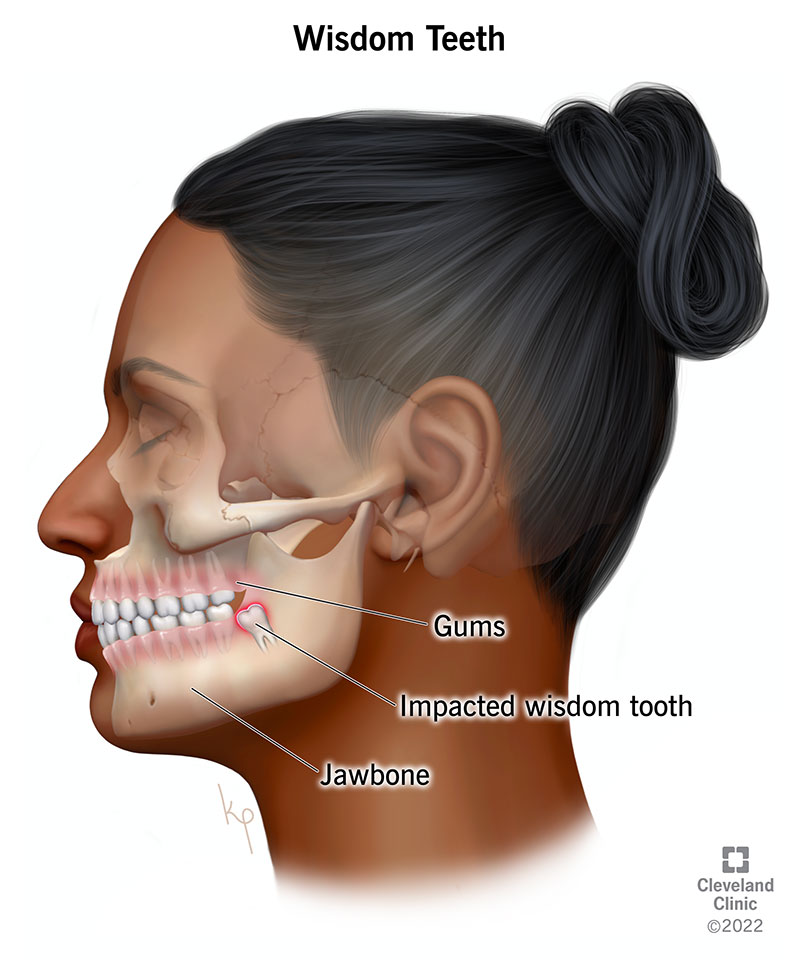
Wisdom teeth are your last set of adult teeth to grow in. Also called “third molars,” your wisdom teeth are located in the very back of your mouth.
Sometimes, wisdom teeth grow in properly and never cause any trouble. But often, wisdom teeth become partially or fully trapped (impacted) in your gums or jawbone. When this happens, it can result in infection, cavities, gum disease and other oral health issues. That’s why many healthcare providers recommend having your wisdom teeth removed.
Does everyone have wisdom teeth?
No, not everyone has wisdom teeth. One research study found that about 53% of the population has at least one wisdom tooth. And some people never develop wisdom teeth at all.
When do wisdom teeth come in?
Your wisdom teeth usually erupt (grow in) between the ages of 17 and 25. Keep in mind, though, that if you have wisdom teeth that are fully impacted in your gums or jawbone, you might not see them when you look in your mouth.
Do you have to remove wisdom teeth?
Not always. If your wisdom teeth come in normally and don’t cause any problems, you may not need to have them removed.
But if your wisdom teeth start causing pain or tenderness, schedule an appointment with your dentist. They can discuss your options in detail.
Why do we have wisdom teeth?
We don’t really need our wisdom teeth. In fact, most healthcare providers consider them vestigial. This means they served a purpose at one point, but don’t anymore.
Our ancestors’ primitive diet consisted of a lot of raw plants, hard nuts and tough meats — and wisdom teeth were necessary to grind these foods for proper digestion. Today, modern food preparation and eating utensils have eliminated our need for wisdom teeth. As we got used to these dietary changes, our bodies went through some small evolutionary changes. For example, our jaws became smaller. This is why many people don’t have enough room in their mouths for their wisdom teeth to grow in.
Where are my wisdom teeth located?
Wisdom teeth erupt in the very back of your mouth, just behind your second molars. People who have all four wisdom teeth have one in each quadrant — the upper left, lower left, upper right and lower right.
What are the first signs of wisdom teeth coming in?
If you have wisdom teeth coming in, there are a few telltale signs and symptoms. You may notice:
- Redness or swelling in your gums, behind your last molars.
- Jaw pain or tenderness.
- Facial pain, due to wisdom teeth putting pressure on nerves.
- White flecks behind your last molars. These spots are likely the tops of your new teeth erupting through your gums.
What are some conditions that affect wisdom teeth?
Some people develop complications due to impacted wisdom teeth or wisdom teeth that haven’t erupted properly. These complications may include:
- Wisdom teeth pain.
- Infection.
- Cavities.
- Gum disease.
- Damage to neighboring teeth.
- Cysts.
- Tumors.
What are the most common treatments for wisdom teeth?
The most common treatment is wisdom teeth removal. This procedure is usually done under sedation in your dentist or an oral surgeon’s office. But it can also be done under general anesthesia in a hospital when necessary.
People of any age can have their wisdom teeth removed. But to prevent future oral health complications, many people have their wisdom teeth removed in their late teens or early 20s.
It usually takes about one week to recover after wisdom teeth removal. Your surgeon will give you a list of postoperative instructions to help keep you comfortable during your recovery.
Unlike other teeth, wisdom teeth don’t provide a lot of function. So, there’s no need to replace them once they’re removed.
How can I care for my wisdom teeth?
If you still have your wisdom teeth, your dentist will check them during routine exams to make sure they’re healthy. In addition to seeing your dentist regularly, you should:
- Brush your teeth two to three times a day. It can be difficult to reach the back surfaces of your wisdom teeth. Take your time and make sure you’re cleaning all the hard-to-reach areas.
- Floss your teeth once a day. Use dental floss to clean between your teeth. You can also use dental picks or interproximal brushes (tiny brushes that fit between your teeth) for hard-to-reach areas.
- Use an antibacterial mouthwash. Make sure it’s alcohol-free. This helps reduce your risk of dry mouth.
A note from Cleveland Clinic
Wisdom teeth are vestigial (unnecessary) features of our bodies. Wisdom teeth removal has become a rite of passage for many teens and young adults around the globe. But if your wisdom teeth erupt in alignment with your other teeth and don’t cause any problems, you may not need to do anything. To learn more about your wisdom teeth — and whether you should remove them — talk to your healthcare provider.