

What is the lymphatic system?
The lymphatic system is a network of tissues, vessels and organs that work together to move a colorless, watery fluid called lymph back into your circulatory system (your bloodstream).
Some 20 liters of plasma flow through your body’s arteries and smaller arteriole blood vessels and capillaries every day. After delivering nutrients to the body’s cells and tissues and receiving their waste products, about 17 liters are returned to the circulation by way of veins. The remaining three liters seep through the capillaries and into your body’s tissues. The lymphatic system collects this excess fluid, now called lymph, from tissues in your body and moves it along until it's ultimately returned to your bloodstream.
Your lymphatic system has many functions. Its key functions include:
- Maintains fluid levels in your body: As just described, the lymphatic system collects excess fluid that drains from cells and tissue throughout your body and returns it to your bloodstream, which is then recirculated through your body.
- Absorbs fats from the digestive tract: Lymph includes fluids from your intestines that contain fats and proteins and transports it back to your bloodstream.
- Protects your body against foreign invaders: The lymphatic system is part of the immune system. It produces and releases lymphocytes (white blood cells) and other immune cells that monitor and then destroy the foreign invaders — such as bacteria, viruses, parasites and fungi — that may enter your body.
- Transports and removes waste products and abnormal cells from the lymph.
###
What are the parts of the lymphatic system?
The lymphatic system consists of many parts. These include:
- Lymph: Lymph, also called lymphatic fluid, is a collection of the extra fluid that drains from cells and tissues (that is not reabsorbed into the capillaries) plus other substances. The other substances include proteins, minerals, fats, nutrients, damaged cells, cancer cells and foreign invaders (bacteria, viruses, etc). Lymph also transports infection-fighting white blood cells (lymphocytes).
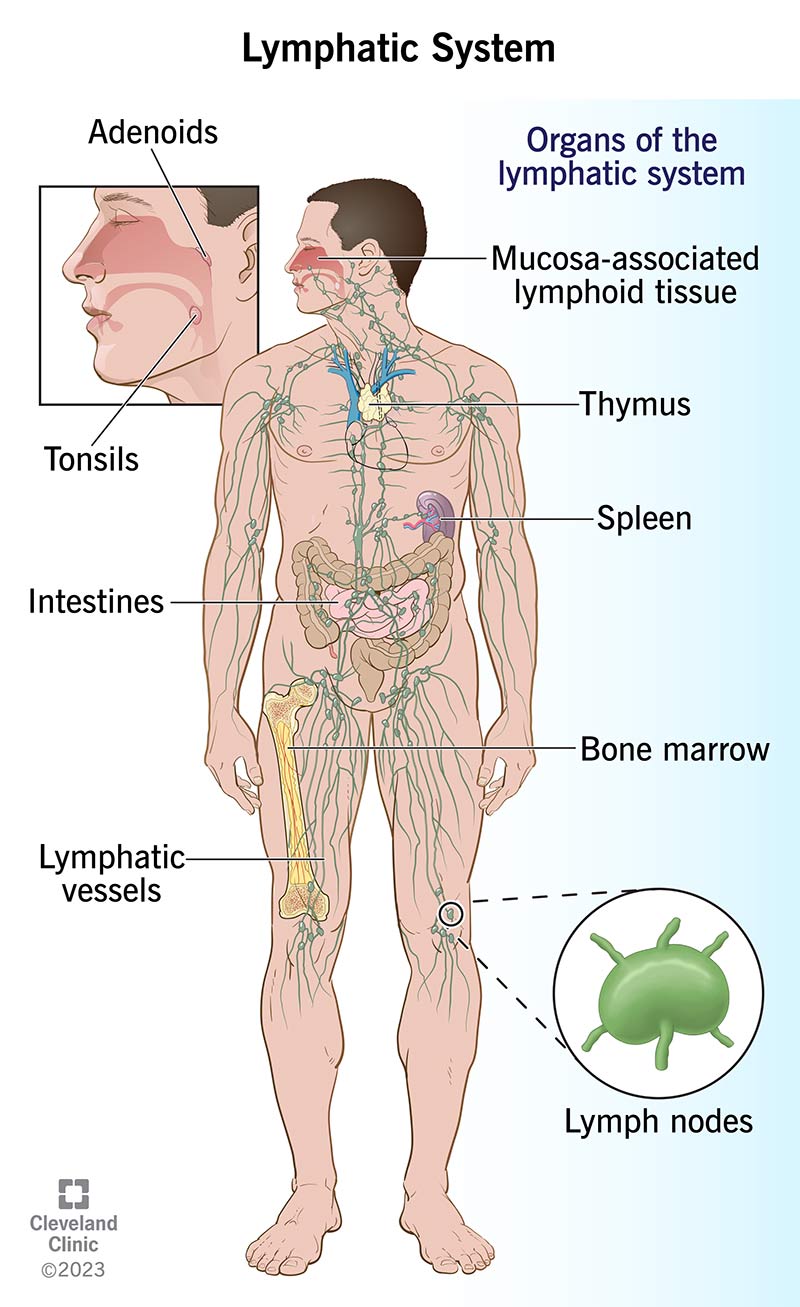
- Lymph nodes: Lymph nodes are bean-shaped glands that monitor and cleanse the lymph as it filters through them. The nodes filter out the damaged cells and cancer cells. These lymph nodes also store lymphocytes and other immune system cells that attack and destroy bacteria and other harmful substances in the fluid. You have about 600 lymph nodes scattered throughout your body. Some exist as a single node; others are closely connected groups called chains. A few of the more familiar locations of lymph nodes are in your armpit, groin and neck. Lymph nodes are connected to others by the lymphatic vessels.·
- Lymphatic vessels: Lymphatic vessels are the network of capillaries (microvessels) and a large network of tubes located throughout your body that transport lymph away from tissues. Lymphatic vessels collect and filter lymph (at the nodes) as it continues to move toward larger vessels called collecting ducts. These vessels operate very much like your veins do: They work under very low pressure, have a series of valves in them to keep the fluid moving in one direction.
- Collecting ducts: Lymphatic vessels empty the lymph into the right lymphatic duct and left lymphatic duct (also called the thoracic duct). These ducts connect to the subclavian vein, which returns lymph to your bloodstream. The subclavian vein runs below your collarbone. Returning lymph to the bloodstream helps to maintain normal blood volume and pressure. It also prevents the excess buildup of fluid around the tissues (called edema).
The lymphatic system collects excess fluid that drains from cells and tissue throughout the body and returns it to the bloodstream, which is then recirculated through the body.
- Spleen: This largest lymphatic organ is located on your left side under your ribs and above your stomach. The spleen filters and stores blood and produces white blood cells that fight infection or disease.
- Thymus: This organ is located in the upper chest beneath the breast bone. It matures a specific type of white blood cell that fights off foreign organisms.
- Tonsils and adenoid: These lymphoid organs trap pathogens from the food you eat and the air you breathe. They are your body’s first line of defense against foreign invaders.
- Bone marrow: This is the soft, spongy tissue in the center of certain bones, such as the hip bone and breastbone. White blood cells, red blood cells, and platelets are made in the bone marrow.
- Peyer’s patches: These are small masses of lymphatic tissue in the mucous membrane that lines your small intestine. These lymphoid cells monitor and destroy bacteria in the intestines.
- Appendix: Your appendix contains lymphoid tissue that can destroy bacteria before it breaches the intestine wall during absorption. Scientists also believe the appendix plays a role in housing “good bacteria” and repopulating our gut with good bacteria after an infection has cleared.
What conditions affect the lymphatic system?
Many conditions can affect the vessels, glands, and organs that make up the lymphatic system. Some happen during development before birth or during childhood. Others develop as a result of disease or injury. Some common and less common diseases and disorders of the lymphatic system include:
- Enlarged (swollen) lymph nodes (lymphadenopathy): Enlarged lymph nodes are caused by infection, inflammation or cancer. Common infections that can cause enlarged lymph nodes include strep throat, mononucleosis, HIV infection and infected skin wounds. Lymphadenitis refers to lymphadenopathy that is caused by an infection or inflammatory condition.
- Swelling or accumulation of fluid (lymphedema): Lymphedema can result from a blockage in the lymphatic system caused by scar tissue from damaged lymph vessels or nodes. Lymphedema is also often seen when lymph nodes are removed from those who've had surgery or radiation to remove cancer. The buildup of lymphatic fluid is most commonly seen in your arms and legs. Lymphedema can be very mild or be quite painful, disfiguring and disabling. People with lymphedema are at risk for serious and potentially life-threatening deep skin infections.
- Cancers of the lymphatic system: Lymphoma is cancer of the lymph nodes and occurs when lymphocytes grow and multiply uncontrollably. There are several different types of lymphoma, including Hodgkin’s lymphoma and non-Hodgkin’s lymphoma. Cancerous tumors can also block lymphatic ducts or be near lymph nodes and interfere with the flow of lymph through the node.
Other disorders include:
- Lymphangitis: This is an inflammation of the lymph vessels.
- Lymphangioma: This is a condition that you're born with. It’s a malformation in the lymphatic system. Lymphangiomatosis is the presence of multiple or widespread lymphatic vascular malformations.
- Intestinal lymphangiectasia: This is a condition in which loss of lymph tissue in the small intestine leads to loss of protein, gammaglobulins, albumin and lymphocytes.
- Lymphocytosis: This is a condition in which there is a higher-than-normal amount of lymphocytes in the body.
- Lymphatic filariasis: This is an infection caused by a parasite that causes the lymphatic system not to function correctly.
- Castleman disease: Castleman disease involves an overgrowth of cells in the body’s lymphatic system.
- Lymphangioleiomyomatosis: This is a rare lung disease in which abnormal muscle-like cells begin to grow out of control in the lungs, lymph nodes and kidneys.
- Autoimmune lymphoproliferative syndrome: This is a rare genetic disorder in which there is a high number of lymphocytes in the lymph nodes, liver and spleen.
- Mesenteric lymphadenitis: This is an inflammation of the lymph nodes in the abdomen.
- Tonsillitis: This is an inflammation and infection of the tonsils.
How can I keep my lymphatic system healthy?
To keep your lymphatic system strong and healthy, you should:
- Avoid exposure to toxic chemicals like those in pesticides or cleaning products. These chemicals can build up in your system and make it harder for your body to filter waste.
- Drink plenty of water to stay hydrated so lymph can easily move throughout your body.
- Maintain a healthy lifestyle that includes regular exercise and a healthy diet.
When should I call my doctor about an issue with my lymphatic system?
Call your doctor if you experience fatigue (extreme tiredness) or have unexplained swelling that lasts more than a few weeks or interferes with your daily activities.
How will my doctor test my lymphatic system?
To see if your lymphatic system is working as it should, your doctor may use imaging tests such as a CT scan or MRI. These tests allow your doctor to see blockages in your lymphatic system.